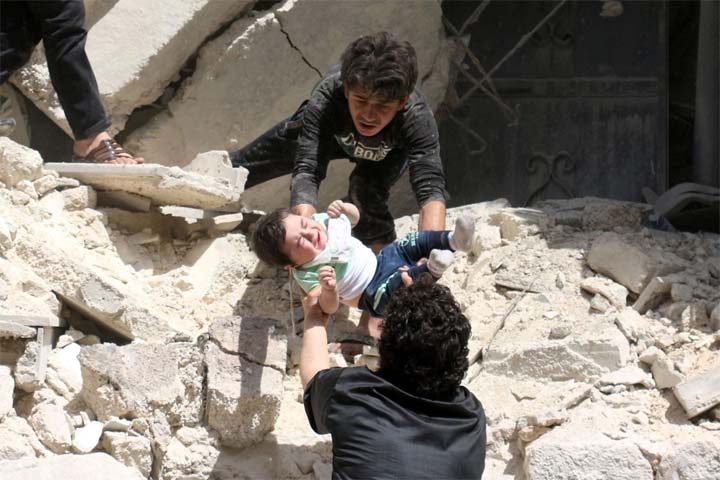
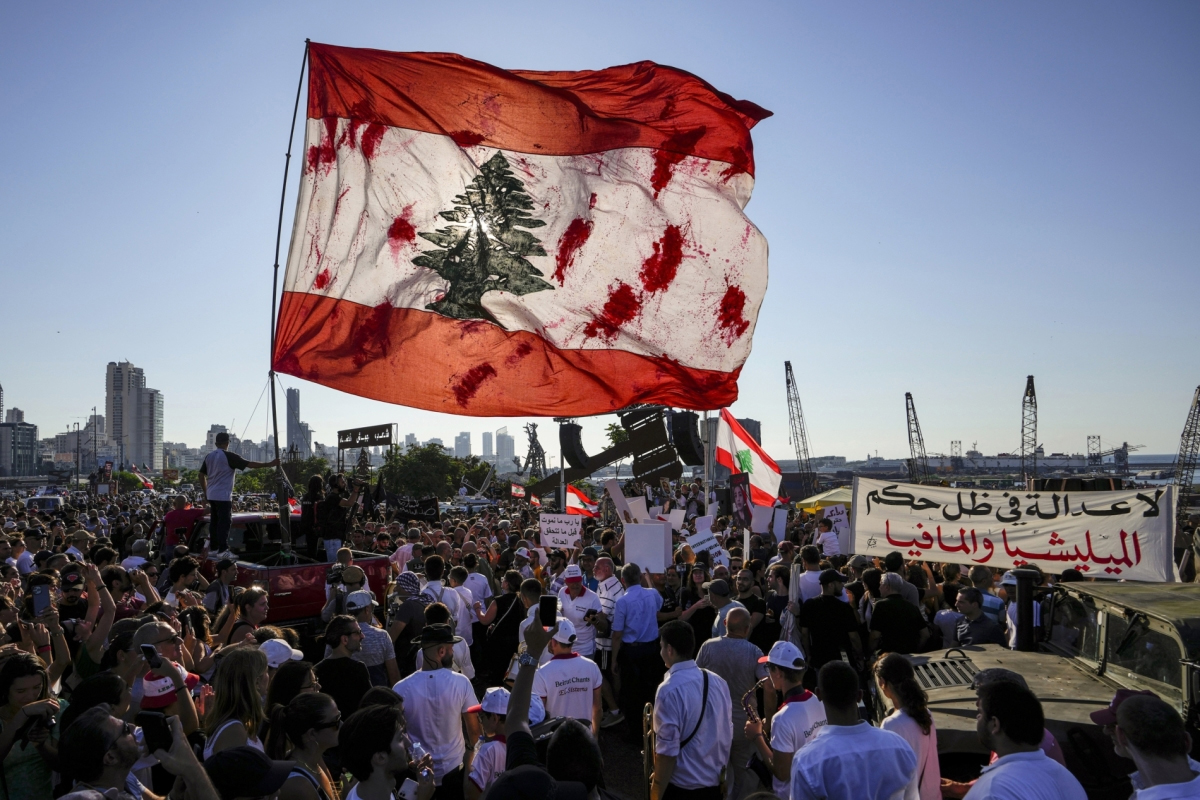
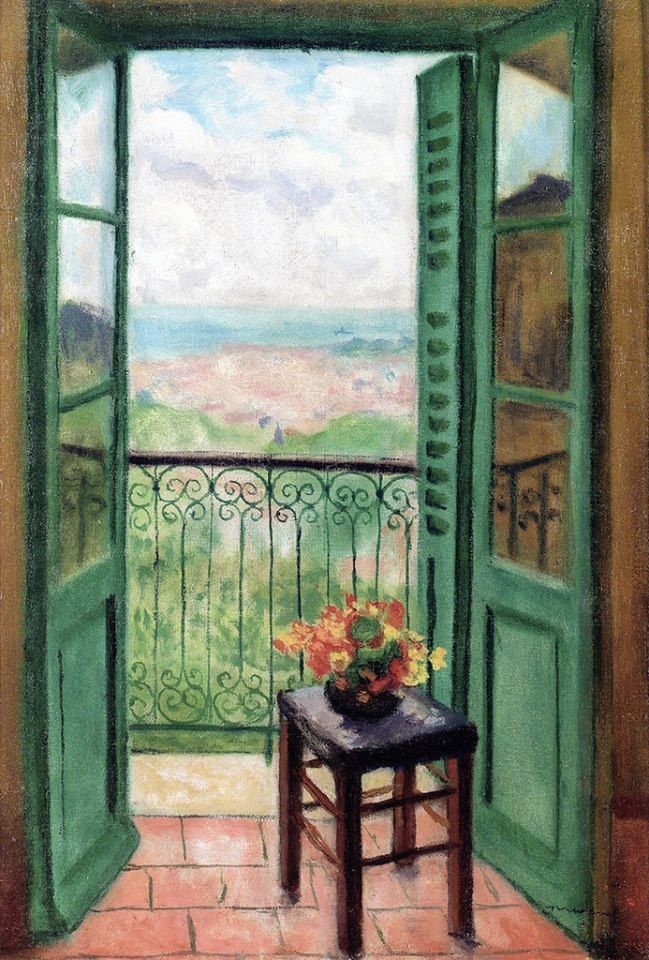

Art has played an influential role in making sense of the loss felt after the August 4 explosion. Tom Young’s “Strong Angels” and other paintings show a human dimension of the tragedy and its civilian heroes, who “join forces to lift the city’s grief,” writes Darine Houmani of Diffah Three (The New Arab). “Despite all its devastation, the August 4 explosion brought greater impetus to preserve our heritage and brought about a database of our historical buildings that hadn’t been done before,” states Mona Hallak, an architect, heritage activist, and director of the American University of Beirut’s Neighborhood Initiative, as cited in The New Arab. Several weighed in on the rebuilding efforts, including Lebanese architect Jad Tabet, who proposed “rehabilitation” rather than “reconstruction,” focusing on preserving the city’s existing social fabric and inhabitants alongside the architecture (for further reading on Jad Tabet and architectural heritage, see Al Jadid, Vol. 4, No, 25, Fall 1998; Vol. 5, No. 26, Winter 1999; and Vol. 24, No. 79, 2020). As art historian and gallery owner Andrée Sfeir-Semler says, “You need to nourish people with art and culture because that is what feeds their souls.”
Seven Years After Her Passing, Emily Nasrallah’s Words Still Carry the Homeland
By Naomi Pham
Renowned Lebanese writer Emily Nasrallah’s legacy continues to broaden the understanding of emigration and exile, celebrated seven years after her death and living on through a foundation established in her honor, the Beit Touyour Ayloul Foundation, named after her first novel, “Birds of September.” On July 7, 2025, the Oriental Library of the Saint Joseph University of Beirut became the new home to a part of Nasrallah’s archive. A decade ago, Nasrallah had also donated 17 documents of her literary works to the same library.
Between the Silence of Taboo and the Cry of Despair
By Naomi Pham
The 10th of September every year marks World Suicide Prevention Day. The International Association for Suicide Prevention (IASP) and World Health Organization (WHO) estimate more than 720,000 suicides occur each year worldwide. Large-scale studies conducted on a global level find that the rates of suicidality (encompassing suicidal ideation, plans, attempts, and death by suicide) are low in the Arab world compared to other countries. 2019 statistics from the World Health Organization reported that countries within the Arab world held figures between 2.0 to 4.8 suicides per 100k (with Syria reporting 2.0 and Iraq 3.6 per 100k).
How Power and Language Keep Arabic Literature at the Margins
By Naomi Pham
Literary prizes have long held the rapt attention of critics, intellectuals, and readers in the Arab world, as evidenced by the dozens of prizes awarded each year for novels, short story collections, and poetry anthologies. Occasionally, Arab writers have been awarded the International Booker Prize or the Prix Goncourt for translated editions of their works. Yet the Nobel Prize, whose last Arab winner was Naguib Mahfouz in 1988, has eluded them for nearly 40 years. Amir Taj al-Sir writes in “The Annual Nobel Fever,” published in Al-Quds Al-Arabi, that Arab readers and intellectuals follow developments surrounding the Nobel Prize “as if stricken with fever — even though it is not an Arab prize, and it is doubtful that it will ever again be awarded to an Arab after Naguib Mahfouz, given the humiliation and marginalization that Arabs and their ancient civilization face across the world.”* Year after year, anticipation over the year’s winner leaves many in the Arab world asking questions similar to those of Brewin Habib in Al-Quds Al-Arabi: “Will the Nobel remember us after 37 years of absence? And will the eternal nominee, Adonis, finally receive it?”
Beirut’s Raouché Rock Tells Stories of Endurance and Collapse
By Elie Chalala
As a Lebanese and as many others who grew up not far from Beirut and the Raouché district — also known as Pigeons’ Rock — I was captivated by its grandeur. Two massive limestone outcrops rise from the Mediterranean along Beirut’s western coast, separated from the mainland by an ancient earthquake. This natural landmark is not only a symbol of beauty but also a silent witness to Lebanon’s triumphs and tragedies.
There is a sense of irony, or perhaps tragic justice, in that the story of a woman whose life and presence were forcibly erased from the public sphere continues to linger on the minds of many, unforgettable even 50 years after her death. Just as she forged a path through the social and political barriers confronting her, the Egyptian feminist, poet, and editor Doria Shafik’s legacy as one of the leading figures of the Egyptian women’s liberation movement in the 1940s cannot be forgotten. Shafik strived to make her voice and the voices of all Egyptian women known, undeterred by the many who hurled insults, slander, and mockery her way — but in exchange for her efforts, all her work was seized, her allies turned their backs on her, and she lived out her final years in silence and isolation.
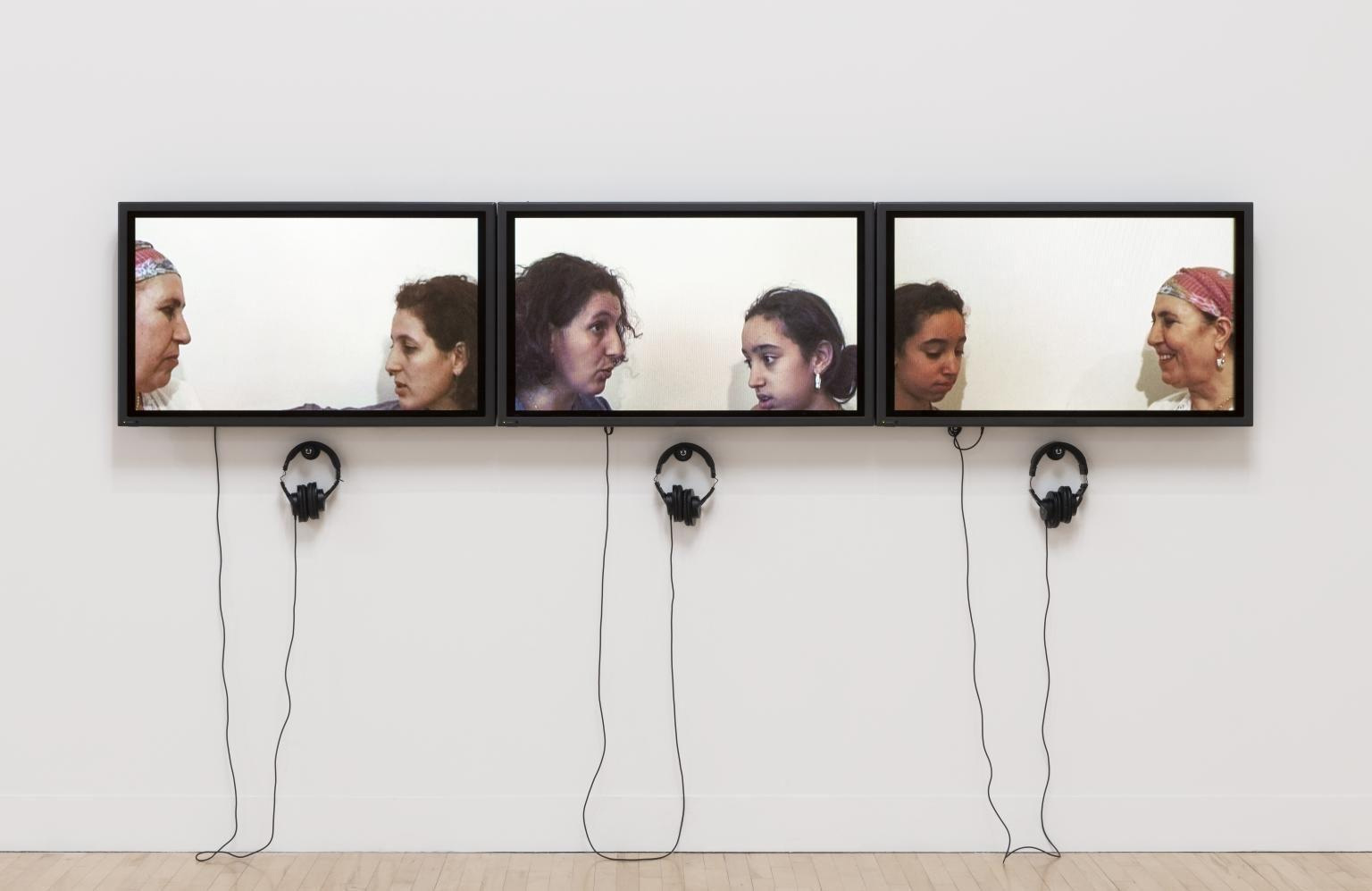
In this exemplary documentary film, women (both veiled and unveiled, religious and secular) discuss the presence of Islam and secularism in contemporary Turkish ...
Women of Turkey: Between Islam and Secularism A film by Olga Nakkas Turkey/Lebanon WMM, 2006