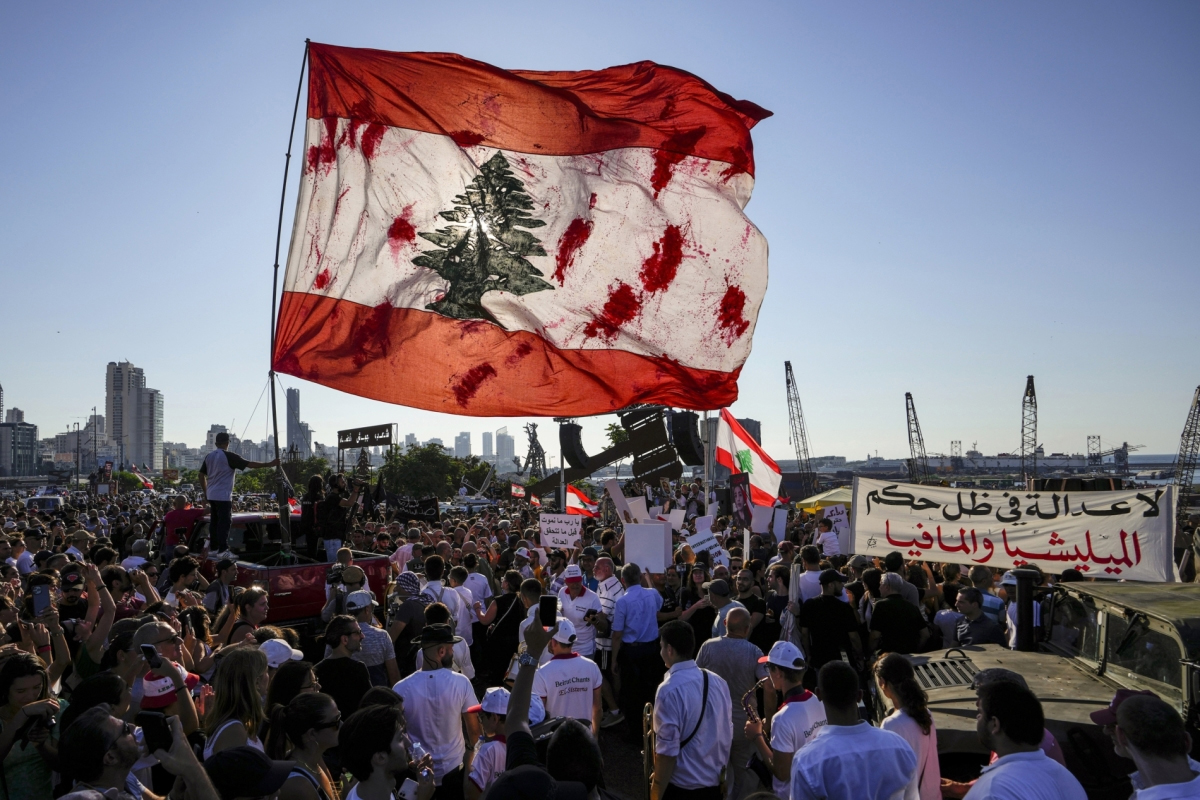
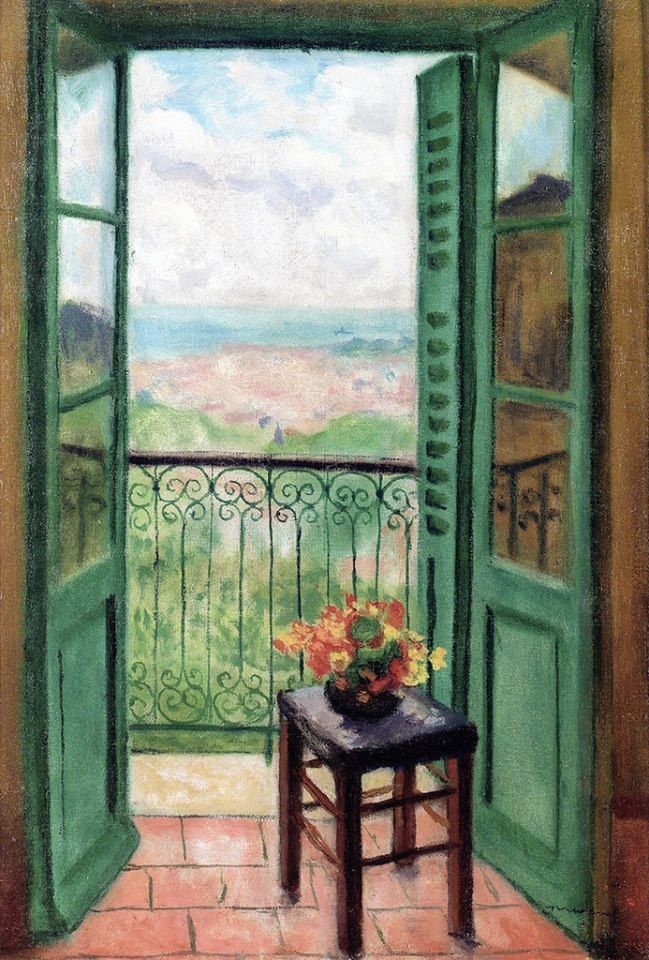
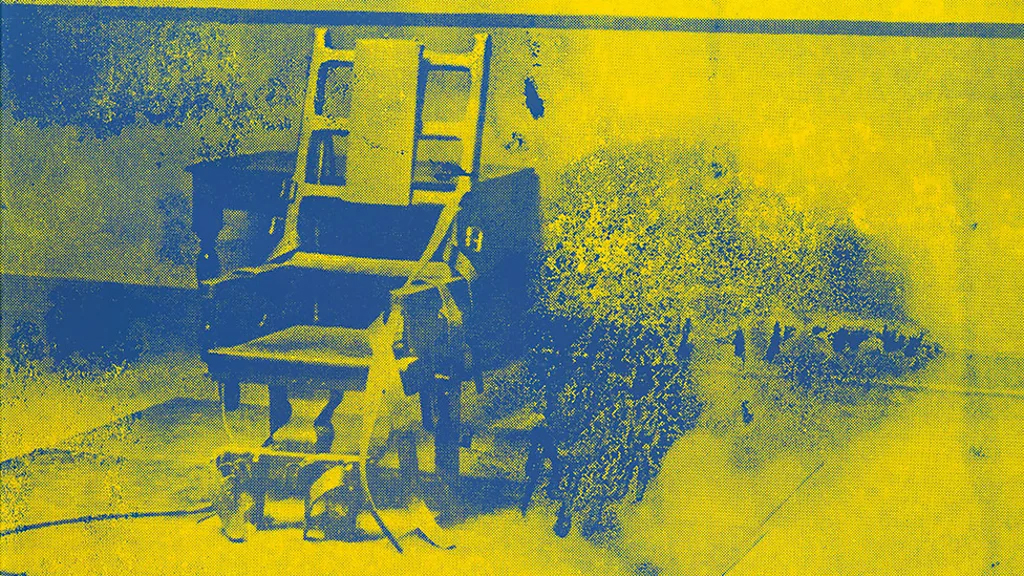
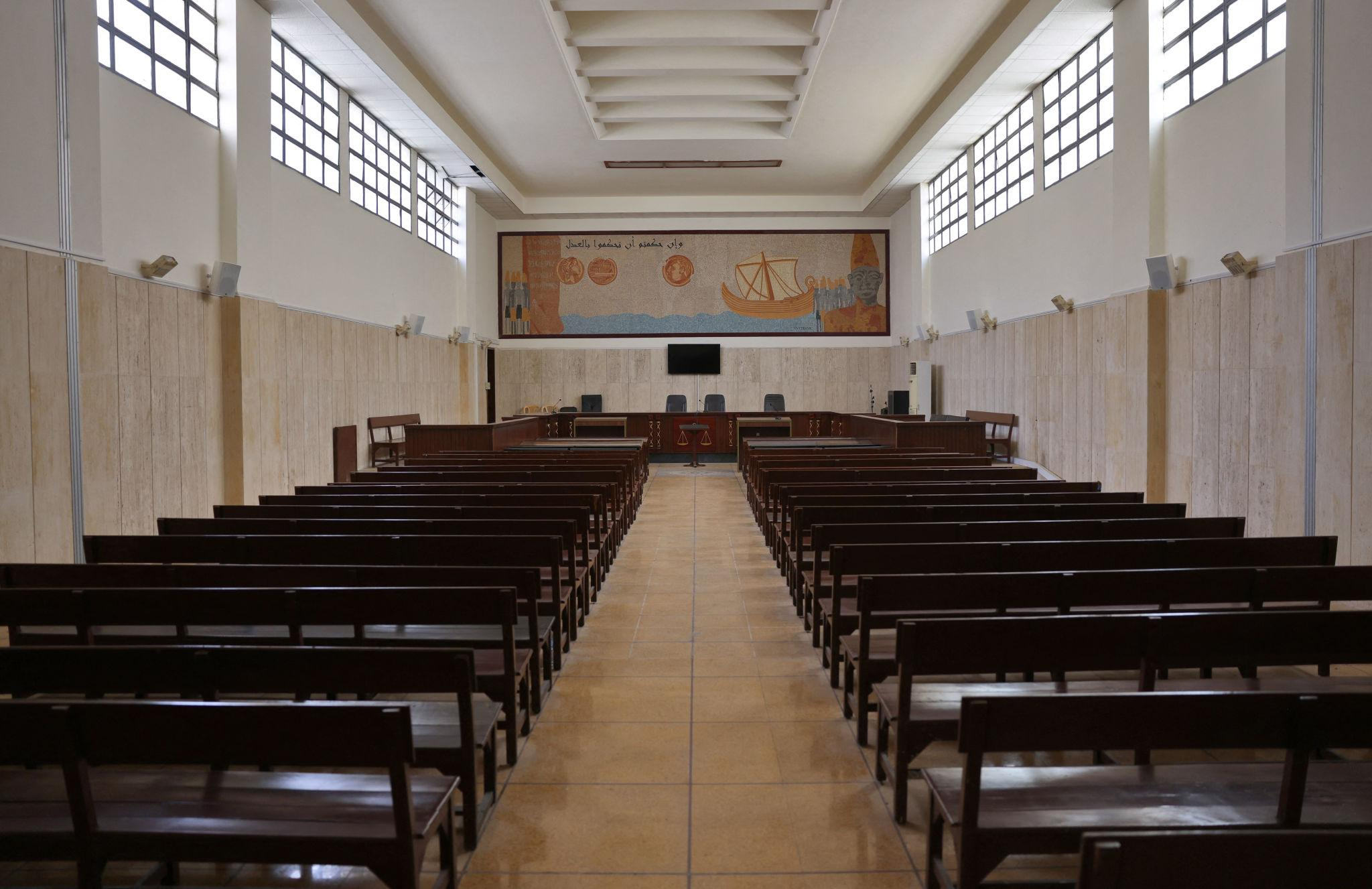
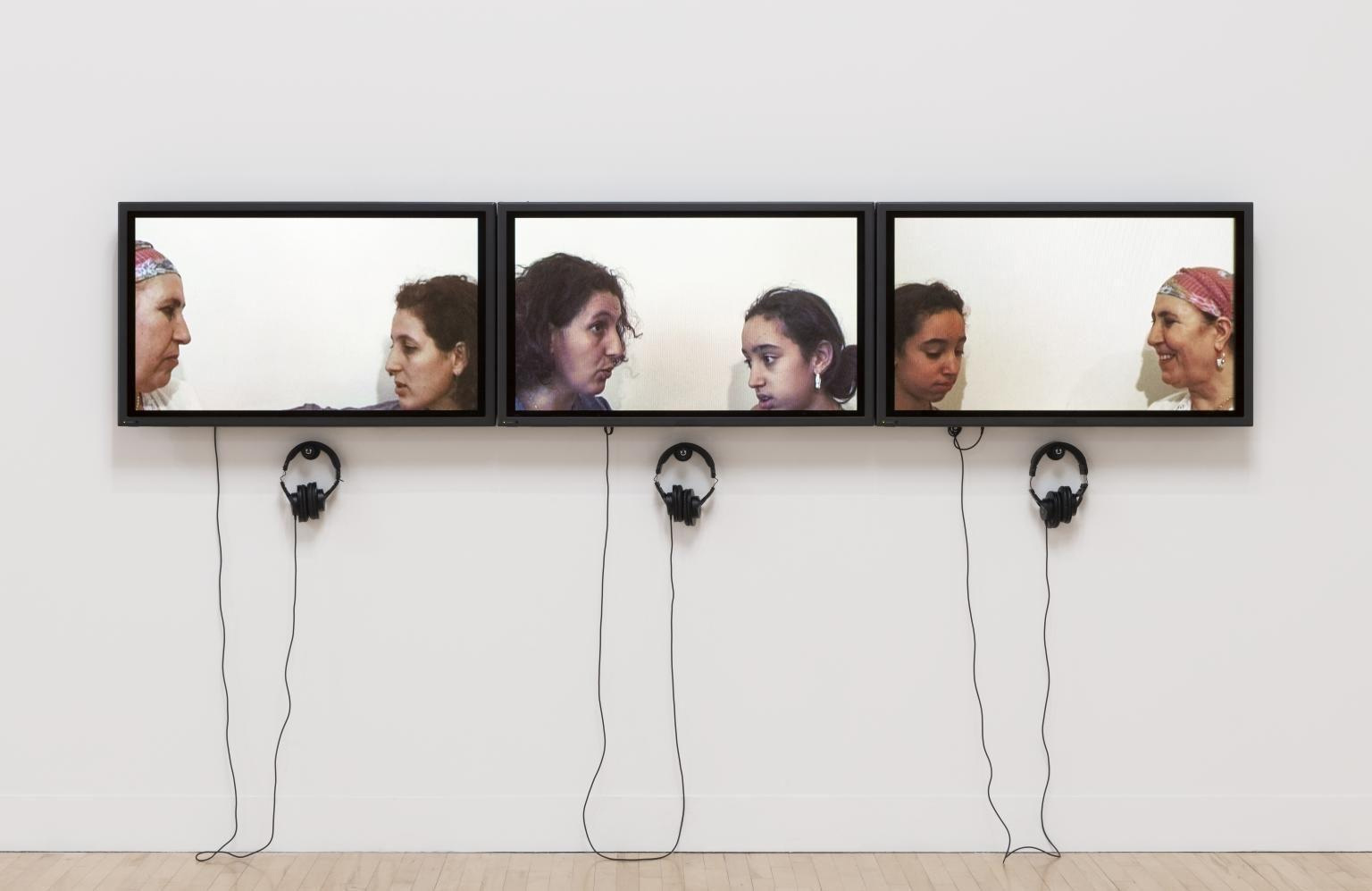

Art has played an influential role in making sense of the loss felt after the August 4 explosion. Tom Young’s “Strong Angels” and other paintings show a human dimension of the tragedy and its civilian heroes, who “join forces to lift the city’s grief,” writes Darine Houmani of Diffah Three (The New Arab). “Despite all its devastation, the August 4 explosion brought greater impetus to preserve our heritage and brought about a database of our historical buildings that hadn’t been done before,” states Mona Hallak, an architect, heritage activist, and director of the American University of Beirut’s Neighborhood Initiative, as cited in The New Arab. Several weighed in on the rebuilding efforts, including Lebanese architect Jad Tabet, who proposed “rehabilitation” rather than “reconstruction,” focusing on preserving the city’s existing social fabric and inhabitants alongside the architecture (for further reading on Jad Tabet and architectural heritage, see Al Jadid, Vol. 4, No, 25, Fall 1998; Vol. 5, No. 26, Winter 1999; and Vol. 24, No. 79, 2020). As art historian and gallery owner Andrée Sfeir-Semler says, “You need to nourish people with art and culture because that is what feeds their souls.”
How 'Niyū Yūrk' Archives the Story of Middle Eastern New York
By Naomi Pham
A rich resource capturing the vast cultural history of New York’s MENA community over centuries, the exhibition "Niyū Yūrk: Middle Eastern and North African Lives in the City" ran from October 4, 2025, to March 8, 2026. Curated by Hiba Abid, the Curator for Middle Eastern and Islamic Studies, and organized by the New York Public Library, the exhibition explores the history of Middle Eastern and North African (MENA) immigration to New York City from the late 19th century to the present, tracing through art, music, literature, and the slew of accomplishments made by the community the ways these emigrants planted their roots in their new home.
Psychiatry, the State, and the Collapse of Care in Lebanon
By Naomi Pham
The stigmatization of mental illness remains prevalent in the Arab world, especially surrounding psychiatric institutions like the Asfourieh Hospital, formally known as the Lebanon Hospital for the Insane, which closed its doors in 1982. While part of Asfourieh’s reputation stems from its direct associations with infamous cases like that of May Ziadeh, much of the hospital’s history has been overlooked, from its ties to the development of treatment for the mentally ill, its contributions in furthering psychiatric studies, and its role as one of the leaders in modernizing medicine in the Arab world at the time.
Issam Mahfouz’s Theatre, Criticism, and the Struggle for Meaning
By Naomi Pham
The late Lebanese playwright, poet, and critic Issam Mahfouz was known for his contributions in numerous fields, including modern poetry, journalism, and, perhaps most famously, as one of the pioneering figures of the Lebanese modern theater movement that lasted from the late 1950s up to the outbreak of the Lebanese civil war in 1975. Following his death in 2006, Al Jadid published a feature article by the late Mohammad Dakroub highlighting Mahfouz’s contributions to Arab criticism. Now, 21 years after his death, many continue to recall his legacy. Alhussam Muhy al-Din’s article, “Twenty Years After the Passing of Issam Mahfouz: A Legacy That Extends Beyond the Theater,” published in Al Quds Al Arabi, rekindles appreciation for the works of this celebrated writer.
Cultured Women and the Fragmented Self in Arab Fiction
By Naomi Pham
Arab women have paved their own paths in the Arab social and cultural sphere throughout history — especially in the early to mid-20th century — by any means possible, whether as writers, leaders, teachers, or founders of clubs, magazines, and movements. Like in reality, women’s determination to secure their positions in fiction is layered with complex barriers. A valuable addition to the Arab critical library, Yemeni writer and researcher Huda al-Attas’ new book, “The Cultured Woman in the Arab Novel: Appropriating Masculinity and Liberating the Body” (Riad Al Rayyes Books and Publishing, 2026), examines the presence and portrayal of women in Arab fiction, going beyond superficial analyses of women as social and emotional beings to question the ways culture, knowledge, and femininity intersect with her existence. Ali Jazo reviews the book in an article for Al Modon, “The Cultured Woman’ by Huda al-Attas: The Imitation of Masculinity and the Suspended Being.”
Clinging to the Fading Memory of Lebanon’s Jewish Community
By Naomi Pham
Lebanon’s dwindling Jewish community is not a recent development, yet it has been reported on like a fascinating phenomenon for years. The once-bustling Jewish quarter in Beirut, Wadi Abu Jamil, is a mere memory. The Magen Abraham Synagogue, built in the district in 1925, now stands abandoned as a silent witness to a bygone era. Only a few dozen members of the Jewish community remain in Beirut, and even fewer are known to the public. In 2019, Liza Srour, one of the last residents of the Jewish quarter, passed away. Last year, the community lost one of its last known members, the art critic and journalist Joseph Tarrab, who refused to leave Lebanon and remained until his death on January 1, 2025.
Arab American literature and how we define it remains central to the field’s discourse. Some scholars believe prior knowledge of Arab culture is essential to comprehending Arab American literature since it is an ethnic genre. Since the 20th century until the present, Arab Americans have strongly lobbied to classify Arab American studies as an ethnic field and draw a line between Middle East studies — which belongs to the area studies — and ethnic studies.
The demise of BBC Arabic closes a chapter in modern Arab history. This is not a romantic or idealistic lamentation. Any Arab student or scholar who lived through or part of the post-WWI era of the 20th century can easily recognize the association between BBC Arabic and major political events. The question becomes not who are the writers of history — it is a history written by the literate or middle classes as opposed to a popular history. How can scholars tell that BBC Arabic was part of the lives of the groups who have written about the contemporary history of the Arab world? We rely on two indicators: literacy and politicization. When I use the term history, I believe that most if not all those who wrote on the political history of the Arab world came from literate classes and were part of groups that cared for and even were engaged in politics. Those included pan-Arabists of the radical schools such as Nasserites and Bathists, conservatives, Islamists, and those moderate liberals opposed to socialists and communist groups.
The demise of BBC Arabic closes a chapter in modern Arab history. This is not a romantic or idealistic lamentation. Any Arab student or scholar who lived through or part of the post-WWI era of the 20th century can easily recognize the association between BBC Arabic and major political events. The question becomes not who are the writers of history — it is a history written by the literate or middle classes as opposed to a popular history.
For 44 years, Al Saqi Books has served as the beating heart of Arab culture for tourists, expatriates, and Arab readers in London — but after struggling to stay afloat amid a rocky economic climate both in the Middle East and at home in the United Kingdom, the independent bookstore recently announced its closure at the end of the month, just before the new year. Over the past decade, bookstores worldwide have been forced to shut their doors. Syria and Lebanon have faced closures due to economic and social crises (read more about the state of the Arab world’s publishing industry in Al Jadid, Vol. 25, Nos. 80-81, 2021 and Vol. 26, Nos. 82-83, 2022). The bookstore chain Borders was liquidated in 2011, and even Barnes & Noble has closed several of its locations. Independent bookstores have taken especially hard hits as the culture of reading shifts with technology, making it increasingly difficult to keep up with costs.
Like a picture captured in history, the iconic arched façade and intricate pilasters of Al Saqi Books have overlooked London’s Westbourne Grove Street for decades, welcoming patrons and everyday passersby on the street with an enticing array of books lining its display windows. A yellow and blue shop sign greets visitors, donning the bookstore’s logo: a man carrying a waterskin on his back, leaning down to pour water for two children.
Remembering A Courageous Writer: His Refusal of Censorship, of Exile, and of Silence
By
Elie Chalala and Naomi Pham
The late Syrian writer Ghassan al-Jibai (1952-2022) was known for his intellectual activities across various art forms, from theater to novels and poetry — but though his craft came in many forms, each harnessed his steadfast opposition to tyranny and oppression. His career as a theater director, dramatist, and writer suffered immensely under the Syrian regime.
A common methodology for Arab critics, journalists, historians, and academics in studying different cinema, music, and other art fields is to categorize them under “Golden” or “Classic” eras, which are defined based on a system of values, a code of behavior, or another classification, such as progressive or conservative. The downside of this method is that it may not allow for impartial analysis and may prevent a thorough understanding of the subject at hand.
Arab Americans in Film: From Hollywood & Egyptian Stereotypes to Self-Representation
By Waleed F. Mahdi
Syracuse University Press, 2020
“Is it possible to re-narrate the Arab American story beyond the imperatives of suspicion and patriotism?” University of Oklahoma assistant professor and cultural critic Waleed F.
Gender-based violence is not a new phenomenon in the Arab world. Attacks against women have been on the rise for years. One might recall the attacks on female social media influencers in 2018, leading to the deaths of former Miss Baghdad Tara Fares, beauticians Rasha al-Hassan and Rafif al-Yasiri, and the human rights activist Suad al-Ali.