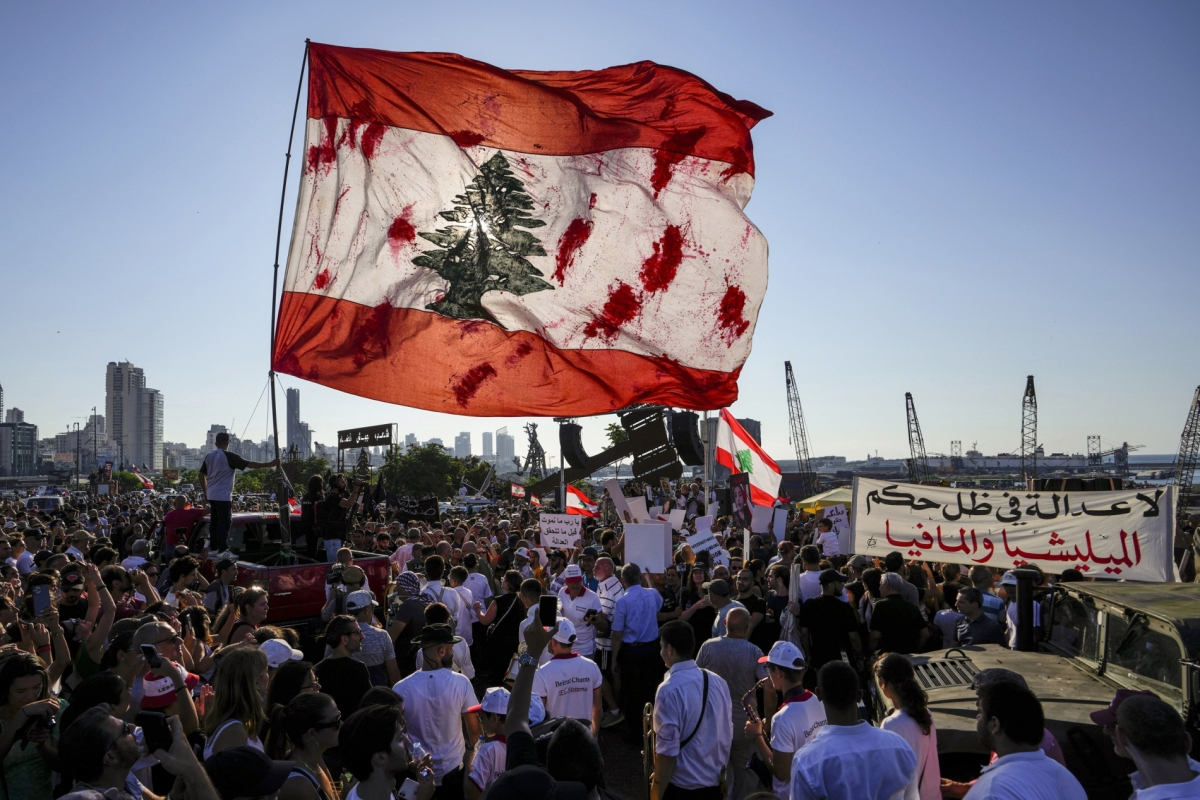
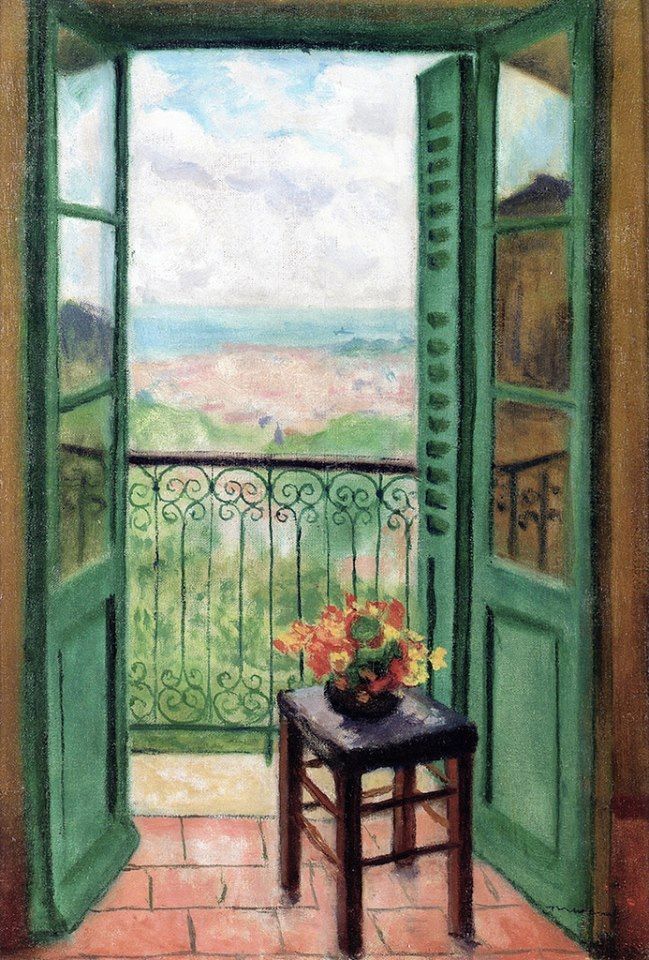
Art has played an influential role in making sense of the loss felt after the August 4 explosion. Tom Young’s “Strong Angels” and other paintings show a human dimension of the tragedy and its civilian heroes, who “join forces to lift the city’s grief,” writes Darine Houmani of Diffah Three (The New Arab). “Despite all its devastation, the August 4 explosion brought greater impetus to preserve our heritage and brought about a database of our historical buildings that hadn’t been done before,” states Mona Hallak, an architect, heritage activist, and director of the American University of Beirut’s Neighborhood Initiative, as cited in The New Arab. Several weighed in on the rebuilding efforts, including Lebanese architect Jad Tabet, who proposed “rehabilitation” rather than “reconstruction,” focusing on preserving the city’s existing social fabric and inhabitants alongside the architecture (for further reading on Jad Tabet and architectural heritage, see Al Jadid, Vol. 4, No, 25, Fall 1998; Vol. 5, No. 26, Winter 1999; and Vol. 24, No. 79, 2020). As art historian and gallery owner Andrée Sfeir-Semler says, “You need to nourish people with art and culture because that is what feeds their souls.”
Damascus and the Distance Between Memory and Reality
By Naomi Pham
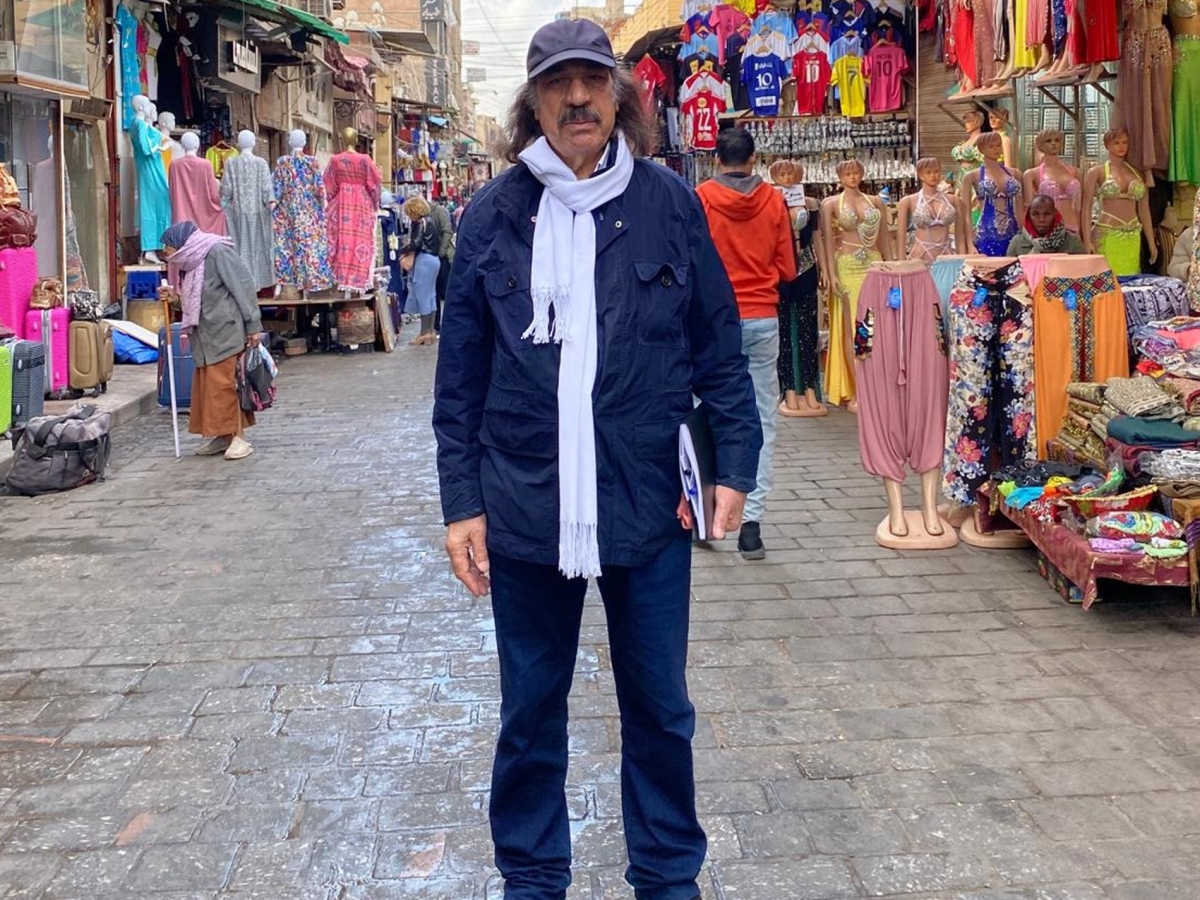
“Step outside yourself for a moment. The city you see now is the successor to the one you once knew; you may love it just as you loved the one you are still searching for — otherwise, you will remain an orphan, forever,” writes Syrian novelist Khalil al-Neimi in his essay, “How Did You Find Damascus?” Place, the self, and memory are familiar themes in Neimi’s works. The writer spent 54 years in exile, fleeing from his homeland and home city of Damascus in 1972 to Beirut, Marseille, and ultimately Paris, where he has lived ever since. After over 50 years, Neimi first returned to Damascus in November 2025 and, most recently, in October 2026, to attend a book signing for his latest work, “In Praise of Escape.” In those decades between his departure and return, it was not just Syria that changed, but also the writer himself. Now, as then, Damascus continues to occupy the writer’s thoughts, memories, and very existence.
The Centenary of the Pioneers Festival hosted at Al-Rashid Theater in Baghdad took place between October 1 and 3, 2026, featuring literary discussions, poetry readings, and music celebrating 100 years since the births of Iraqi poets Badr Shakir al-Sayyab, Abdul-Wahab al-Bayati, and Buland al-Haydari, all born in 1926, who contributed to modern Arabic poetry. This celebration follows the announcement that Badr Shakir al-Sayyab’s childhood home will be restored as a museum dedicated to his work. His granddaughter Dimah al-Kweder, an architect, has been hired to restore the home. Funded by the European Union, UNESCO, in partnership with Iraq’s Ministry of Culture, Tourism, and Antiquities, plans to transform the house into a cultural center and literary museum. Original rooms have been adapted for the new cultural center to serve as exhibition centers and to house a library and materials related to Sayyab’s work.
As someone who read Gibran during my time in Lebanon (excluding “The Prophet”), I recall all types of exaggerations about the poet, including those labeling him a genius, almost prophetic, without daring to explain his limitations to the level that at times I confused him with one of the many Christian Maronite saints, especially when this sect had ordained a large number of saints. Kahlil Gibran’s worldwide success can not be attributed solely to the East or the West. Influenced by both his childhood in Lebanon and the new realms of knowledge that opened up to him in the West, Gibran’s universal voice spoke on experiences that anyone, regardless of nation or creed, could understand. The success of “The Prophet” introduced the writer’s name to global audiences. Since then, the book has sold over 100 million copies worldwide and has been translated into over 100 languages. In his essay, “Before the West, There Was Lebanon: How Was Gibran’s Character Shaped?”, published in Al Quds Al Arabi, Mouloud Benzadi traces some of Gibran’s most major influences to the many years before the writer emigrated to the United States — his childhood in Lebanon.
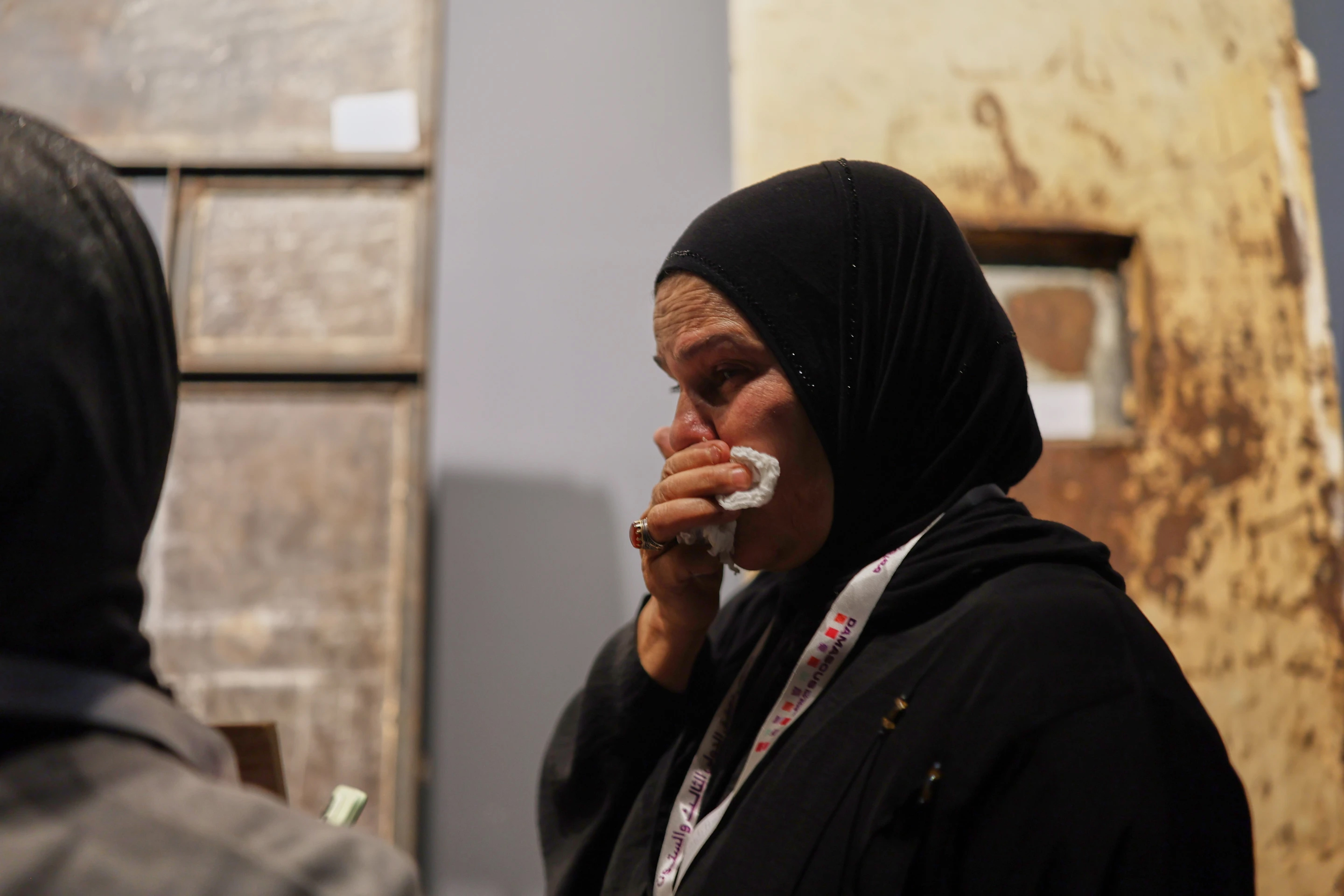
“Everything became visible. The prisons were opened. People entered them. Cells were photographed. Papers, clothes, remnants of beds, doors, and instruments of torture were collected. What had once been hidden was now placed before everyone’s eyes,” writes Sally Ali in her essay, “Should We ‘Eat Each Other’s Worries’?”, published in Al Modon.* Yet visibility does not necessarily constitute remembrance, nor does displaying the material remains of suffering mean that those who suffered have been cared for in the aftermath. The 63rd Damascus International Fair held in late August brought the horrors of Assad’s prisons out under open air for all to see. The exhibition “When the Walls Speak” was presented in the Interior Ministry’s pavilion. The exhibit included a reconstruction of a cell using real cell doors, detainees’ clothing, handcuffs and other restraints, and a chair used for torture — all items collected from the various prisons and security branches, including Military Security Branch 248, which operated under the Assad regime.
A healthy literature cannot be entirely free of crime fiction, or, more broadly, of literature that confronts crime, violence, and human conflict. No society is free of conflicts, whether visible or hidden. A brief look at Algeria’s history before and after independence reveals a long record of political upheaval, repression, and violence. The question, then, is not whether such realities exist, but whether literature is willing to confront them.
Carlos ben Carlos Rossman, a Puerto Rican Jew, is in for a surprise. When he lands in New York Harbor in 1950, he realizes that the American melting pot is more fable than fact. In many cases, diversity is likely to make one “Un-American” rather than American. Language, culture, religion, or even something as simple as a green baseball bat, when all of the other kids own plain pine bats, can result in ostracism.
In the House UN-American
By Benjamin Hollander
Clockroot Books, 2013
“In the House UN-American” is about tribes, how they differ and whether it’s possible to become a member of one you weren’t born into. Carlos ben Carlos Rossman, a Puerto Rican Jew (a double-pronged tribe!) lands in New York Harbor in 1950.
A Study in Courage: Screenwriter and Activist Fouad Hamira
Cinematic activist, Fouad Hamira, who began his career working for the National Theater, has become one of the leading voices for justice in Syrian television. Despite all attempts to silence him, this man of courage and conviction remains as vocal as ever. Since the current uprising in Syria, he has denounced injustices such as the government’s attempts to reframe the battle for Syrian freedom as a sectarian uprising.
Fouad Hamira, who began as an employee in the National Theater, has gone on to become one of the leading voices in Syrian television drama. He is renowned for his unwillingness to compromise with the forces of societal and political oppression. His controversial “Ghazlan fi Ghabat al-Dhi‘ab” (Gazelles in a Forest of Wolves), which was filled with a poignant critique of corruption and the abusive nature of power, was finally allowed to air in 2006, although he had written the miniseries 15 years earlier.
In this exemplary documentary film, women (both veiled and unveiled, religious and secular) discuss the presence of Islam and secularism in contemporary Turkish ...
Women of Turkey: Between Islam and Secularism A film by Olga Nakkas Turkey/Lebanon WMM, 2006