
Damascus and the Distance Between Memory and Reality
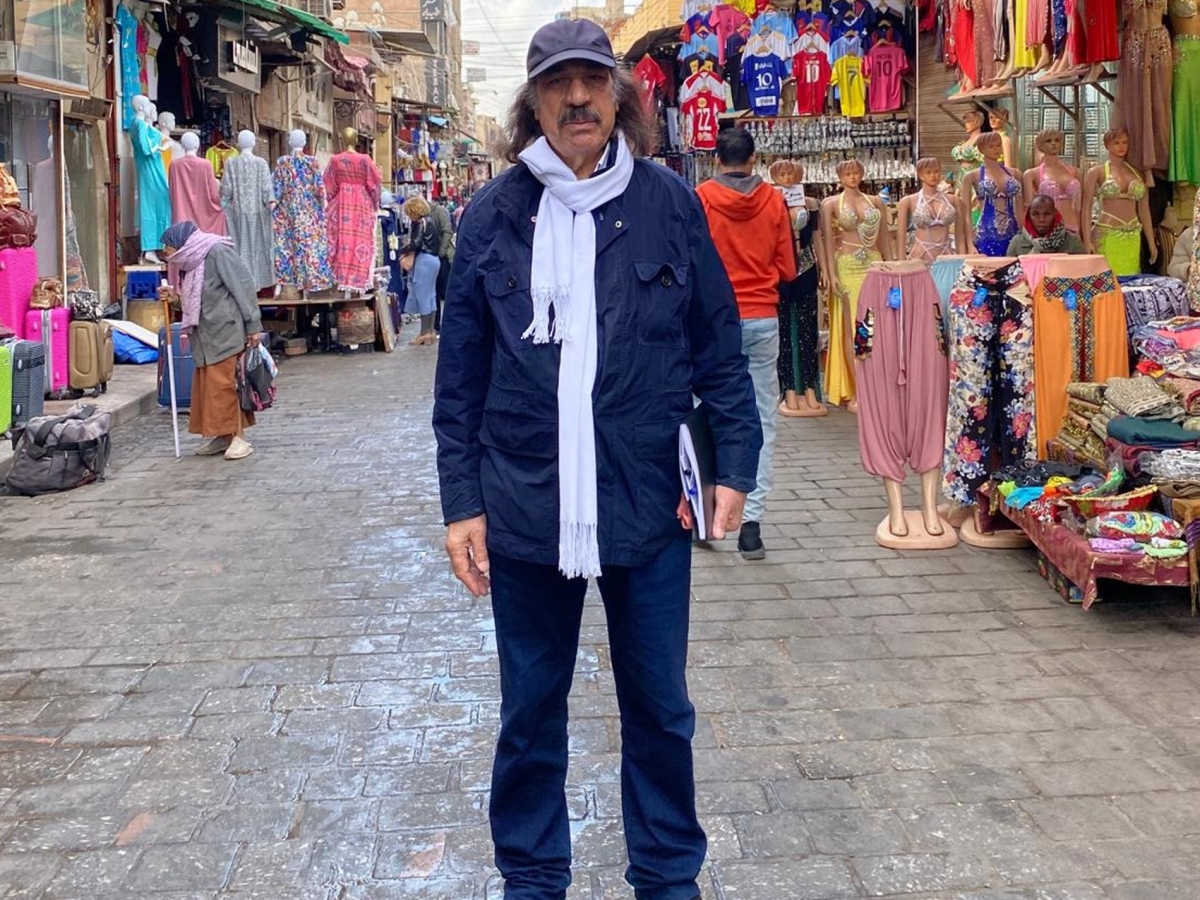
Syrian writer Khalil al-Neimi.
“Step outside yourself for a moment. The city you see now is the successor to the one you once knew; you may love it just as you loved the one you are still searching for — otherwise, you will remain an orphan, forever,” writes Syrian novelist Khalil al-Neimi in his essay, “How Did You Find Damascus?”* Place, the self, and memory are familiar themes in Neimi’s works. The writer spent 54 years in exile, fleeing from his homeland and home city of Damascus in 1972 to Beirut, Marseille, and ultimately Paris, where he has lived ever since. After over 50 years, Neimi first returned to Damascus in November 2025 and, most recently, in October 2026, to attend a book signing for his latest work, “In Praise of Escape.” In those decades between his departure and return, it was not just Syria that changed, but also the writer himself. Now, as then, Damascus continues to occupy the writer’s thoughts, memories, and very existence.
In 2024, a year before the writer’s return to Damascus, Neimi commented on the importance of ‘place’ in an interview with Al Jazeera: “Places are what create one another…My relationship with places is not a ‘constructive’ one that I can describe in a few lines. It is not a spiritual relationship, nor one of longing, nor one of memories; it is a formative one. Places, and above all my first place, are what have created me and shaped me into who I am now. They “engineered” my mind and feelings, not just my emotions. Places are not described; they are experienced.”**
Neimi’s relationship with Damascus goes beyond mere nostalgia and a fixation on the past. In his words, the “desire to reclaim what can no longer be reclaimed is irresistible.” Two versions of Damascus stand before him: that of his memory, from a time before he fled into exile, and the one that stands in its place — a Damascus that has weathered tyranny and survived; a Damascus that has changed just as he has changed from his time separated from it. The complicated emotions he bears towards the homeland are in themselves an existential dilemma. Neimi grasps for a historical moment that no longer exists, and for a younger version of himself who cannot be recovered. As he describes, “It [Damascus] beholds me in a way that terrifies me and stirs my deepest emotions: as a person who lost his place, only to find it again — yet without ever finding it within the space he truly sought — the space defined by an intimate, yearning desire to embrace both the place and all that dwells within it.” This place so beloved to him was defined by his emotional attachment to it. Upon his return, he found this attachment stripped away, and the city before him practically a stranger.
The writer’s first impressions of the “new” Damascus upon his 2025 visit betrayed his disappointment in the city he had left behind. He described the experience at the time in an article by Khalil Sweileh in Al Majalla, stating, “Damascus today is a skeletal husk, stripped of spirit by tyranny that has dragged it a century backward. I roam its quarters like an aging eagle, stunned beneath the tyranny of the sun, contemplating the void and silently asking: how did Damascus lose its ancient intimacy? Today, it stands as a symbol of erosion, the erosion of being and place in synchrony.”***
After visiting once more a year later, Neimi has also revisited his feelings towards Damascus, especially regarding change. He states that “desire, much like cities, is subject to change,” and that this attitude “compels us to constantly ‘create’ new cities, as if to compensate for the one we have lost forever.” He speaks of a nostalgia consigned to memory, no longer reachable — a yearning for a place we constantly try to reclaim but that can never be replicated. Neimi understands the logical explanation for why Damascus has changed, yet this does not stop his desire for the Damascus he remembers of his past. In his words, “To search for your original city is to search for your own youth — for the vigor of your early years, for the vague sense of existence that once dwelt in your heart, for the creative ignorance that drove you to take flight with the wind, leaving behind everything you loved and loathed.” The “you” he addresses is just as much the reader as it is himself, a dialogue he must engage internally not just as a writer but as a human being. The relationship between place and self in the context of exile cannot be clearly expressed in words; it is a complex state, for both you and your homeland are like strangers to each other. As Neimi writes, “You do not truly know one another, yet you are not entirely ignorant of each other.”
Despite this understanding, Neimi’s reflections direct the reader away from despair, but towards a new beginning, a revelation he perhaps came upon after looking upon Damascus with changed eyes — that we can return to a place without being able to return to the relationship we once had with it. He states, “The city you love has not perished; it lies right before your eyes — it is simply that you no longer see what you once saw. And what does it matter? You must return from your self-imposed exile — either to see what you wish to see, or to grow accustomed to seeing what you do not.” The greater the distance from the homeland, the greater the longing for it and the more exaggerated the imagination of what it once was.
Do we love places for what they actually are, for what they once were, or for what we have imagined them to be? In the words of Neimi, “You once practiced the art of 'writing about a place from afar,' but today you realize that writing about it while dwelling within it is an entirely different matter.” Exile can continue even after physical return. The challenge, then, is no longer simply to return home, but to accept the home that exists rather than remain imprisoned in the home remembered. In this renewed discussion on place and the self, Neimi challenges himself to develop a new relationship with contemporary Damascus rather than remain emotionally attached to an irretrievable version of the city. For, as Neimi writes, “Everything changes when we are in the place we love. Even our love for it shifts, perhaps evolving into an entirely different emotion… A place possesses infinite faces.”
*Khalil al-Neimi’s essay, “How Did You Find Damascus?”, was published in Arabic in Al Quds Al Arabi.
**Khalil Sweileh’s essay, “Khalil al-Neimi: All I Can Do Is Expose What I See,” was published in Arabic in Al Majalla.
***Abdul Rahman Mazhar Halloush’s essay, “Syrian Novelist Khalil al-Neimi: I Prefer Saying Goodbye to Places, Not People,” was published in Arabic in Al Jazeera.
Al Jadid previously published an article on Khalil al-Neimi. Elie Chalala’s essay, “A Syrian Surgeon and Novelist Returns to a 'Country Once Called Syria' — Khalil al-Neimi Exposes What Tyranny Has Done to His Homeland,” was published in Inside Al Jadid Reports, No. 123, 2025. To read the full article, click on the link below:
This article appeared in Inside Al Jadid Reports, No. 195, 2026.
Copyright © 2026 AL JADID MAGAZINE