
Olive Trees, Memory, and Belonging
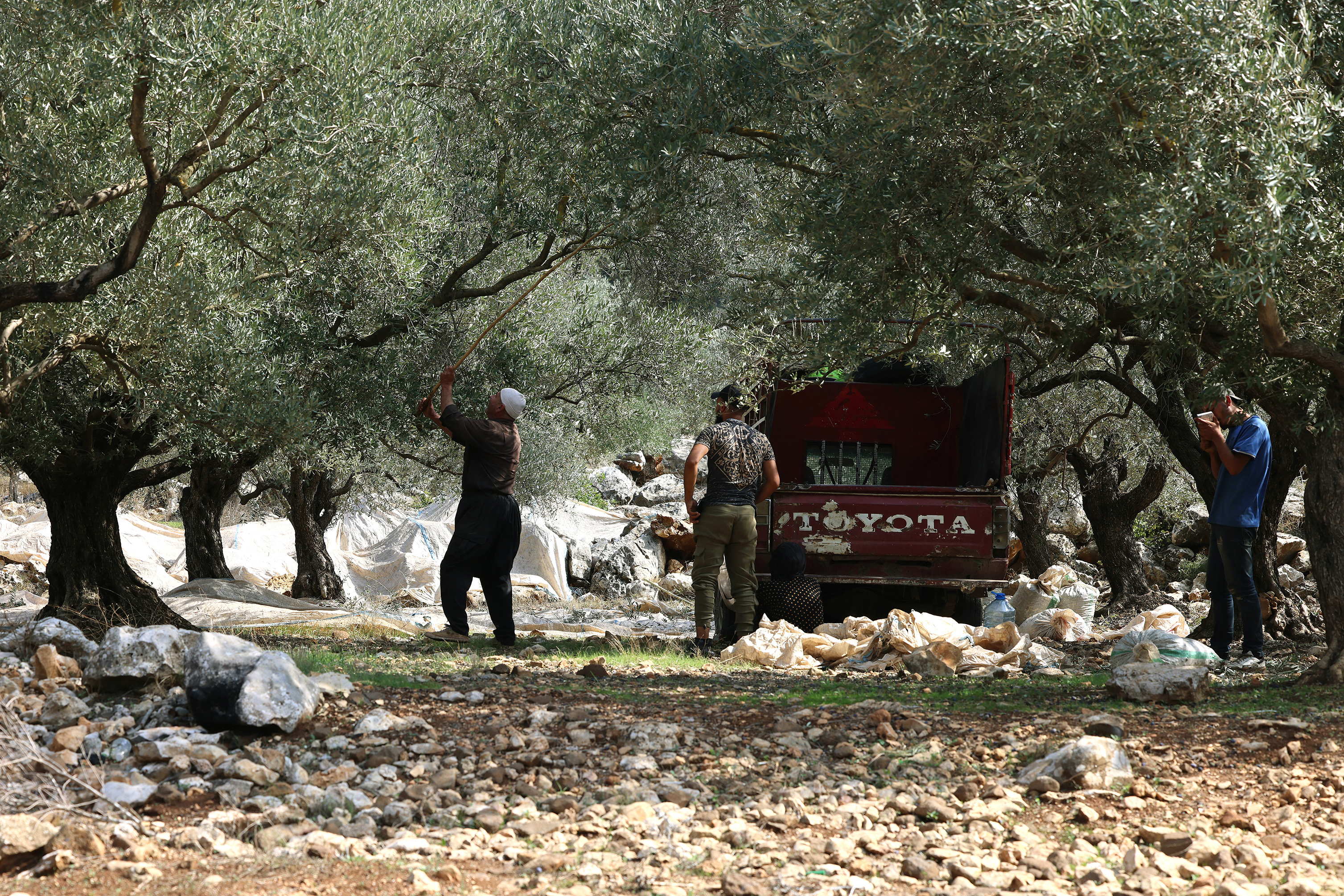
Farmers picking olives in Hasbaya, Lebanon. Photograph credit Joseph Eid/AFP.
Lebanon’s olive trees stand as a symbol of peace, sustenance, and a deep connection to one’s heritage and land. The northern Lebanese villages of Amioun and Bshaaleh are home to some of the oldest olive trees in the world, many of which date back at least 1,500 years. Since ancient times, these trees have witnessed the rise and fall of civilizations — including the Phoenicians, Romans, Byzantines, and Ottomans — and are known for their resilience and adaptability, which have enabled them to survive for millennia and continue to bear fruit season after season.
Against the backdrop of violence, conflict, and bloodshed, the olive tree also stands as a stark reminder of Lebanon’s contradiction. The innocence and purity of nature, which has much to give but asks for nothing in return, contrasts sharply with the avarice of those, blinded by their own ideologies, who wage battles and encourage sacrifice on behalf of the land, or so they claim. In his Al Modon essay “A Basket of Olives and a Rifle,” Marwan Harb paints the image of southern Lebanese men and women returning to their fields after devastation, as if “embracing something that has survived death.”* There are no pretenses in this scene; it is merely the honest portrayal of a land and its people, unmuddied by politics, political parties, and sacrifice. At the same time, an inherent political message punctuates this scene. According to Harb, “In a country where the land has been burdened with the meanings of martyrdom and self-sacrifice, the joy of harvesting olives seems like a quiet reclaiming of the human right to love one’s land without having to die for it.”
In this sense, the figure of the farmer and the fighter stand at opposite ends. The fighter upholds his ideology; the land is a test of sacrifice, and bloodshed is a measure of loyalty and worthiness. To the farmer, land is the promise of life. The farmer’s culture is a nurturing, mutually beneficial relationship to the land and nature. In Harb’s words, “This relationship predates politics and runs deeper than any party affiliation. It is a bond established not by death but affirmed by life.” Harb suggests that love for one’s country should be measured not only by the willingness to die for it, but also by the potential to build a life within it. In his words, “A person does not become more attached to the land by being buried in it, nor less faithful to it by choosing to live upon it.”
Should death remain the dominant language through which loyalty to the land is understood? Narratives of heroism and martyrdom do nothing to nurture the land or help it grow and bear fruit. Ideology is dangerous, capable of changing the relationship between people and place. In this culture, place becomes sacred in proportion to the blood spilled upon it, and death is equated with fidelity, writes Harb. However, he emphasizes that “the land’s dignity is not measured by the number of those who have fallen defending it, but by the number who have managed to remain upon it, planting and dreaming.”
This is the heart of Marwan Harb’s essay: to call for an end to the cycle of violence that is encouraged by a culture that glorifies bloodshed and martyrdom. The land is not a battlefield, nor is it a sacred possession that demands sacrifice. It is a living environment sustained by human care, endurance, and patience. The olive tree asks neither for blood nor for declarations of loyalty; it simply requires people to tend it and to remain alive to enjoy its fruit — for the deepest expression of attachment to the land may be the ability to live from it, care for it, and pass it on to the next generation. As Harb aptly writes, “In the South, the hands reaching toward the olive branches were saying something that required no political declaration. They were saying that the land does not belong to war, that loving it does not require perpetual mourning, and that the person who returns to it carrying a basket is no less faithful than the person who carried a rifle to defend it. Indeed, perhaps the deepest tribute to those who died for the land is for the living to stop dying upon it.”
*Marwan Harb’s essay, “A Basket of Olives and a Rifle,” was published in Arabic in Al Modon.
This article appeared in Inside Al Jadid Reports, No. 192, 2026.
Copyright © 2026 AL JADID MAGAZINE