Art has played an influential role in making sense of the loss felt after the August 4 explosion. Tom Young’s “Strong Angels” and other paintings show a human dimension of the tragedy and its civilian heroes, who “join forces to lift the city’s grief,” writes Darine Houmani of Diffah Three (The New Arab). “Despite all its devastation, the August 4 explosion brought greater impetus to preserve our heritage and brought about a database of our historical buildings that hadn’t been done before,” states Mona Hallak, an architect, heritage activist, and director of the American University of Beirut’s Neighborhood Initiative, as cited in The New Arab. Several weighed in on the rebuilding efforts, including Lebanese architect Jad Tabet, who proposed “rehabilitation” rather than “reconstruction,” focusing on preserving the city’s existing social fabric and inhabitants alongside the architecture (for further reading on Jad Tabet and architectural heritage, see Al Jadid, Vol. 4, No, 25, Fall 1998; Vol. 5, No. 26, Winter 1999; and Vol. 24, No. 79, 2020). As art historian and gallery owner Andrée Sfeir-Semler says, “You need to nourish people with art and culture because that is what feeds their souls.”
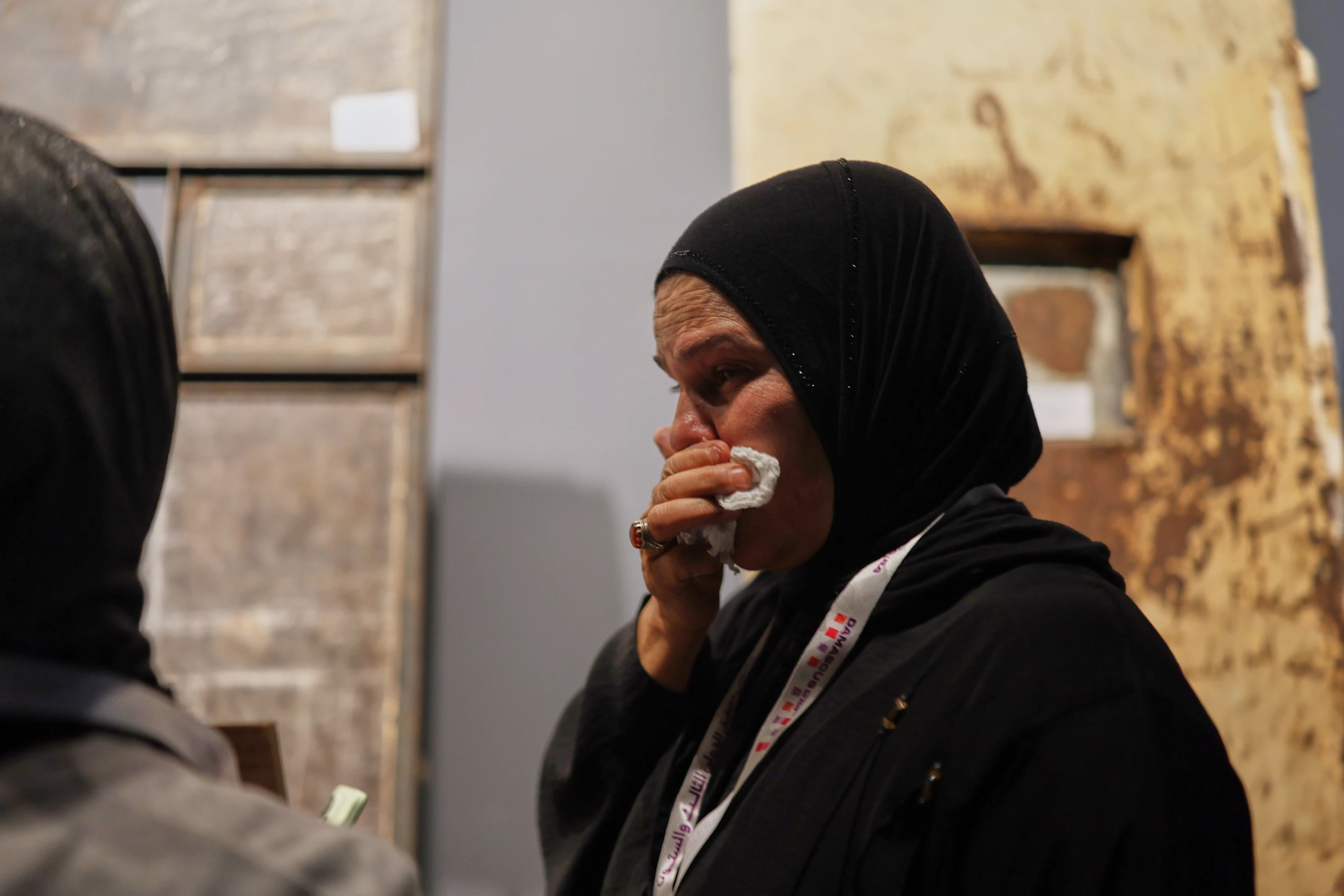
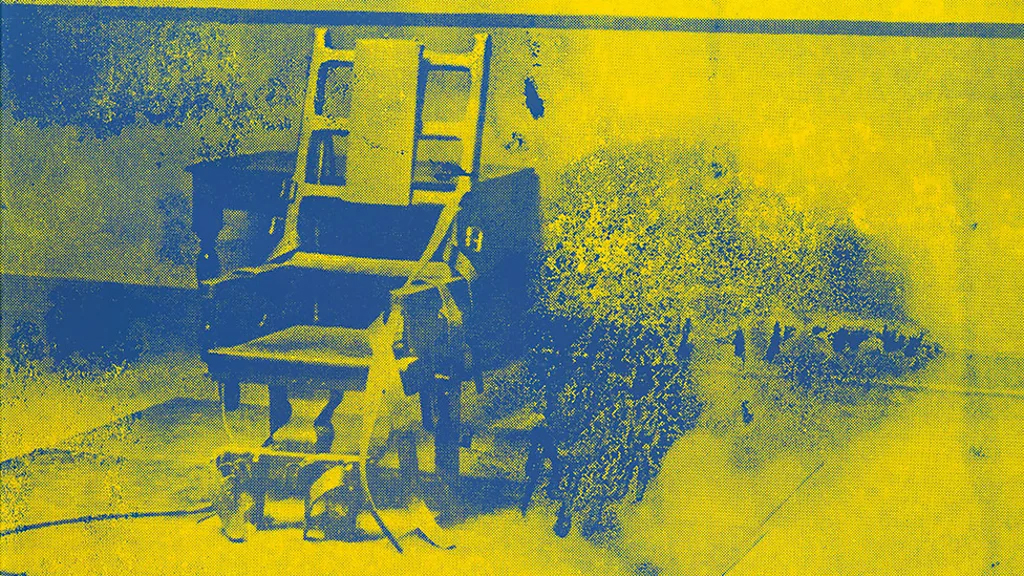
“Everything became visible. The prisons were opened. People entered them. Cells were photographed. Papers, clothes, remnants of beds, doors, and instruments of torture were collected. What had once been hidden was now placed before everyone’s eyes,” writes Sally Ali in her essay, “Should We ‘Eat Each Other’s Worries’?”, published in Al Modon.* Yet visibility does not necessarily constitute remembrance, nor does displaying the material remains of suffering mean that those who suffered have been cared for in the aftermath. The 63rd Damascus International Fair held in late August brought the horrors of Assad’s prisons out under open air for all to see. The exhibition “When the Walls Speak” was presented in the Interior Ministry’s pavilion. The exhibit included a reconstruction of a cell using real cell doors, detainees’ clothing, handcuffs and other restraints, and a chair used for torture — all items collected from the various prisons and security branches, including Military Security Branch 248, which operated under the Assad regime.
A healthy literature cannot be entirely free of crime fiction, or, more broadly, of literature that confronts crime, violence, and human conflict. No society is free of conflicts, whether visible or hidden. A brief look at Algeria’s history before and after independence reveals a long record of political upheaval, repression, and violence. The question, then, is not whether such realities exist, but whether literature is willing to confront them.
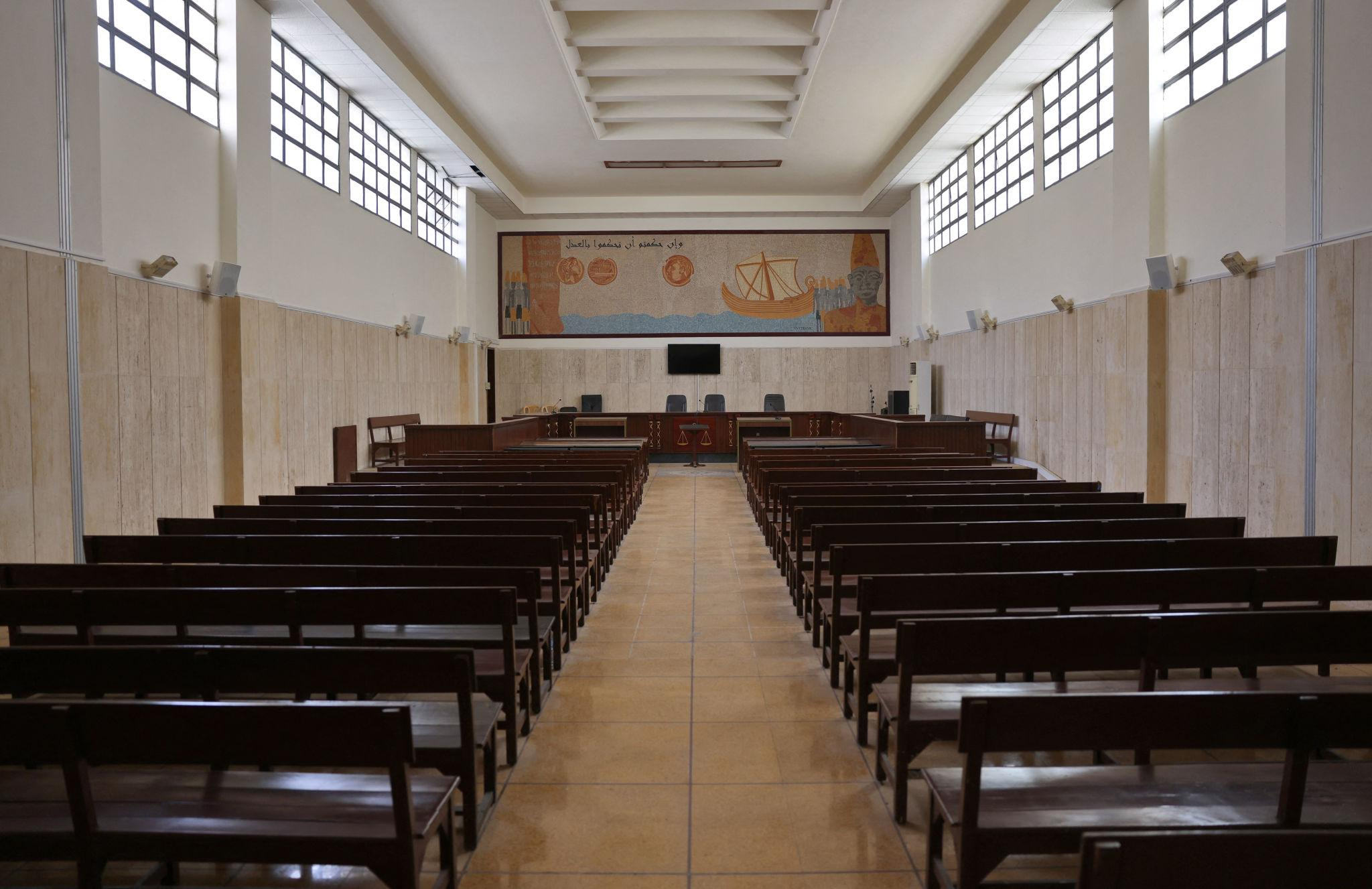
“A state is not tested when it tries someone who is widely loved. It is tested when it tries someone whom most of the country despises,” writes Sally Ali in her essay, “On One Day, Beirut Abolishes and Damascus Executes.” This observation is particularly relevant to the recent death penalty decisions in Syria and Lebanon, where the question of punishment has become inseparable from the question of state governance. On August 11, the Damascus Criminal Court sentenced former Syrian president Bashar al-Assad, his brother Maher al-Assad, cousin Atef Najib, former Defense Minister Fahd Jassem al-Freij, and five other former regime officials to death, a ruling that raises broader questions about what kind of government Syria will establish in the aftermath of the Assad regime. On the same day, Lebanon’s parliament approved the abolition of the death penalty, a decision that Marwan Harb argues may carry little meaning for Lebanese citizens unless the state can also address its political and social failures. Together, the contrasting decisions in Syria and Lebanon demonstrate how the death penalty can serve not merely as a form of punishment, but as a measure of a state’s commitment to justice, accountability, and legitimate governance.
August 4 and the Collapse of Lebanon's Last Illusion
By Elie Chalala
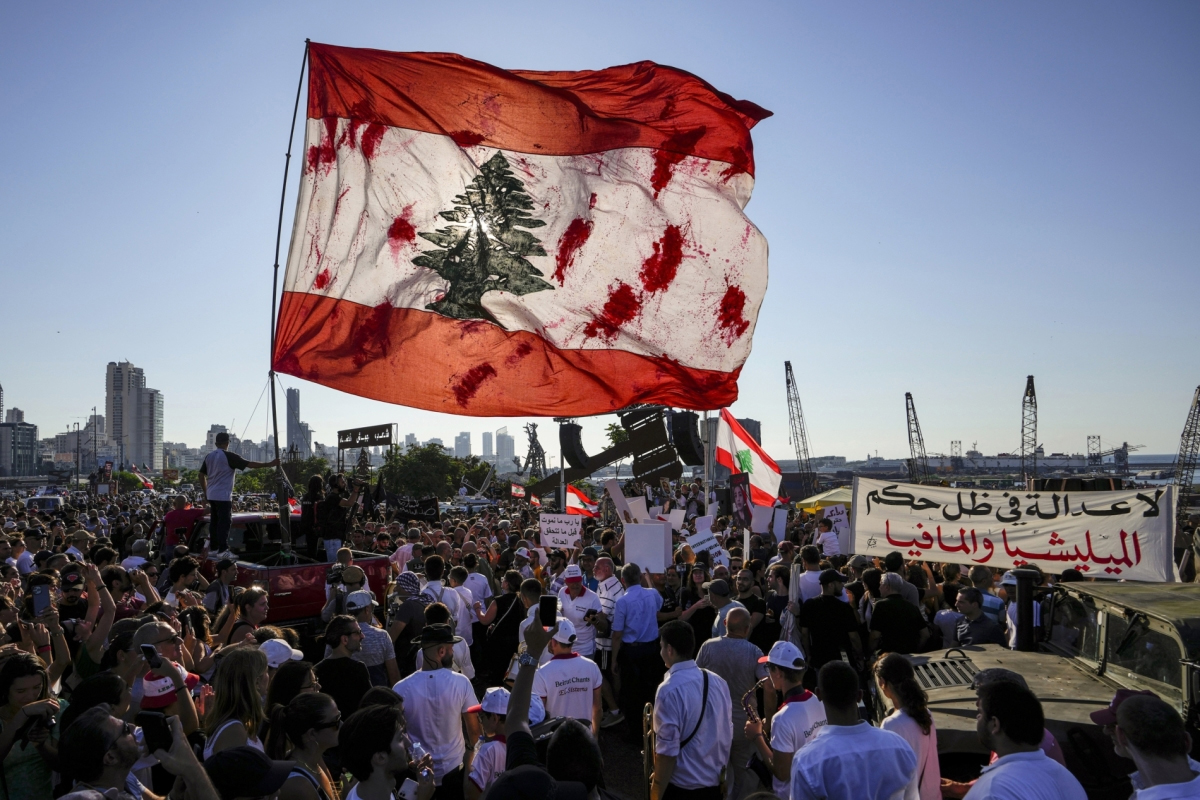
The Beirut Port explosion was not simply a tragic accident, but a catastrophe enabled by years of political negligence and institutional complacency. On August 4, 2020, 2,750 tonnes of ammonium nitrate stored in Hangar 12 alongside fireworks exploded, killing at least 218 people, injuring roughly 7,000, and displacing approximately 300,000 more. Yet in the six years since the blast, efforts to hold those responsible accountable have been repeatedly obstructed, leaving justice suspended and the victims without closure. Rather than focusing solely on the explosion itself, Sally Ali in her essay, “August 4 and the Insolence of Crime,” examines the political structure that allowed such dangerous conditions to persist and, more importantly, the system that has survived largely unchanged in its aftermath. The question is not simply whether justice has yet to arrive, but whether the greater danger lies in the state’s ability to endure six entire years after a crime that should have fundamentally transformed it.
French, Historical Memory, and Algeria's Linguistic Future
By Naomi Pham
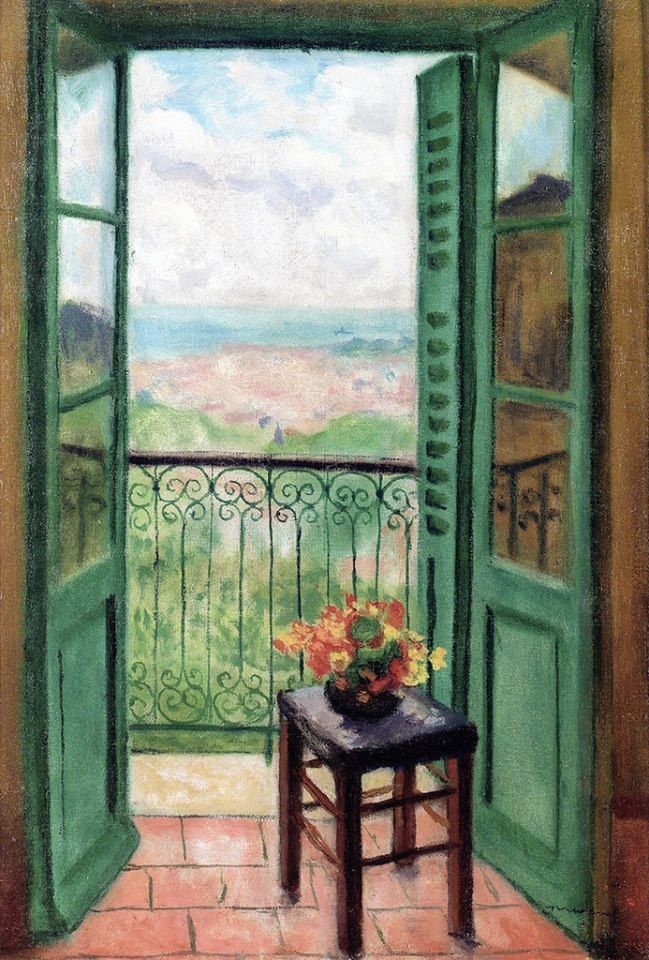
In Algeria, the debate over whether French should be replaced by English has become increasingly entangled with broader geopolitical and ideological tensions, often overshadowing the country’s actual linguistic and educational needs. In his discussion of Algeria’s “language question,” Algerian novelist and author Waciny Laredj rejects both the demonization of French and the uncritical glorification of English, arguing instead for a pragmatic, historically informed, and educationally sound approach to multilingualism.* French remains deeply embedded in Algerian society, from everyday communication to education and professional life, making its complete removal an enormous and potentially disruptive undertaking. At the same time, Laredj challenges narratives that portray French solely as a colonial legacy, pointing to moments in which the language played an important role in intellectual, political, and liberation movements. The question facing Algeria is not simply whether French should be replaced by English, but whether such a transition is practical, historically conscious, and genuinely beneficial to the country and future generations.
Al Jadid is just out (Vol. 19, No. 68). The cover (“Encoded History 1” 2015) by Doris Bittar. Al Jadid is a Review & Record of Arab Culture and Arts (www.aljadid.com). As usual, the new issue is rich with essays and features, book, film and TV reviews, fiction, poetry, and a substantive editor's notebook. ESSAYS AND FEATURES: ‘My Story With You is Different’ by Rima Assaf; ‘Sabah Zwein (1955-2014): An Innovative And Haunted Poet’ by Mike D’Andrea;
Al Jadid is just out (Vol. 19, No. 68). The cover (“Encoded History 1” 2015) by Doris Bittar. Al Jadid is a Review & Record of Arab Culture and Arts (www.aljadid.com).
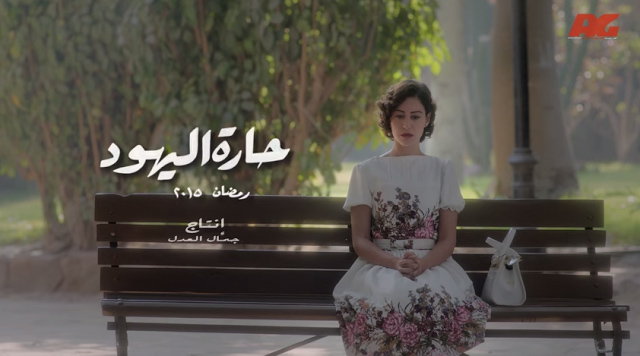
“The Jewish Quarter” has sent some unsettling messages about the “Ramadan series” (or soaps), prompting commentaries in the Arab press and beyond, and finally meriting a feature article in the New York Times. This 30 episode serial, which runs through the month of Ramadan in Egypt, offers a viewpoint unlike that featured in any other serial before or after the Arab Spring.
“The Jewish Quarter” has sent some unsettling messages about the “Ramadan series” (or soaps), prompting commentaries in the Arab press and beyond, and finally meriting a feature article in the New York Times. This 30 episode serial, which runs through the month of Ramadan in Egypt, offers a viewpoint unlike that featured in any other serial before or after the Arab Spring. Its importance stems from its unprecedented and sympathetic treatment of Egypt’s Jews, highlighting their “fierce anti-Zionism” to Egyptian audiences.
I rarely passed on an Al Nakba remembrance, an event which was pivotal in forming my political and moral consciousness during my early days in Beirut and in my academic diaspora. Nowadays, I reserve my aggravation for those intellectual cowards who saw nothing in Al Nakba except a shelter to hide from their shameful silence on one of the most horrific “Nakbas” in modern Arab history.
I rarely passed on an Al Nakba remembrance, an event which was pivotal in forming my political and moral consciousness during my early days in Beirut and in my academic diaspora. Nowadays, I reserve my aggravation for those intellectual cowards who saw nothing in Al Nakba except a shelter to hide from their shameful silence on one of the most horrific “Nakbas” in modern Arab history.
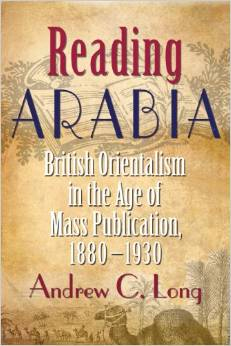
Long writes the book in a scholarly manner, but redeems it with a depth of insight and information on these fascinating personalities at a very important time in Middle Eastern history. Certainly, most will find “Reading Arabia” worth a look.
Reading Arabia: British Orientalism in the Age of Mass Publication 1880–1930
By Andrew C. Long
Syracuse University Press, 2014
The Hollywood epic, “Lawrence of Arabia,” immortalized the familiar story of T.E. Lawrence.
Nearly 11 years ago, an automobile accident on a dusty Jordanian road cut Susan Atefat-Peckham’s life and work short. The Iranian American poet, memoirist and Full bright Scholar now takes her rightful place among the likes of Gregorgy Orfalea and Sharif Elmusa with her “Talking Through the Door.” The anthology transports readers to various eras and exotic locales, going back to Ibn Hazm’s 10th-century Cordoba, the Lebanon of World War I, pre-revolutionary Iran as well as 1950s and 60s Ohio. “Readers will find that these works carry with them a power and promise so life-affirming that Lisa Suhair Majaj describes them as ‘sustenance.’”
Talking Through the Door: An Anthology of Contemporary Middle Eastern American Writing
Edited by Susan Atefat-Peckham
Foreword by Lisa Suhair Majaj
Syracuse University Press, 2014
It has been nearly eleven years since an automobile accident cut Susan Atefat-Peckham’s work and life short while she pursued a Fulbright Scholarship in
The remarkable Assia Djebar has proven almost as controversial in death as in life. Some argued that the writer, who focused on the very human concerns of women, could not be a feminist. Other issues of contention included the Algerian author’s choice to write in French, the language of her country’s former colonizers. Certainly, her induction into the prestigious French Academy as an “immortal,” or life-long member, created controversy, with many critics overlooking the fact that the writer used “the language of the colonizer to document its savagery and some of its bloody memories.” In death, as in life, it appears that Djebar will continue to challenge her critics and provide topics of lively debate. Read more about her life and final journey back to Algeria in the following article.
Assia Djebar has been problematic for some Arab intellectuals, both when she became an "immortal" or a life-long member of the prestigious French Academy and when her name was frequently mentioned as a Nobel Prize contender. Her death on February 6 2015, proved no exception. As her body lay in one of Paris’ hospitals, the same questions arose: Why were her works not translated enough into Arabic? In contrast, her novels were translated into scores of other languages. That is a valid question.
In the this interview with the critically acclaimed Syrian watercolorist, Etab Hreib, she discusses the interrelated nature of the arts in the context of her own love for the theater and set design, and details various influences on her work.
Critically acclaimed Syrian watercolorist, Etab Hreib, a native of Der-Ez-Zor, graduated from the Graphic Arts Department of the University of Damascus. Since then, she has exhibited her work in various parts of the world. She was the recipient of the Al-Mahros Golden Award in Tunisia, a Golden Award from the Chinese Ministry of Culture, and an award from the Ministry of Culture in Algeria.