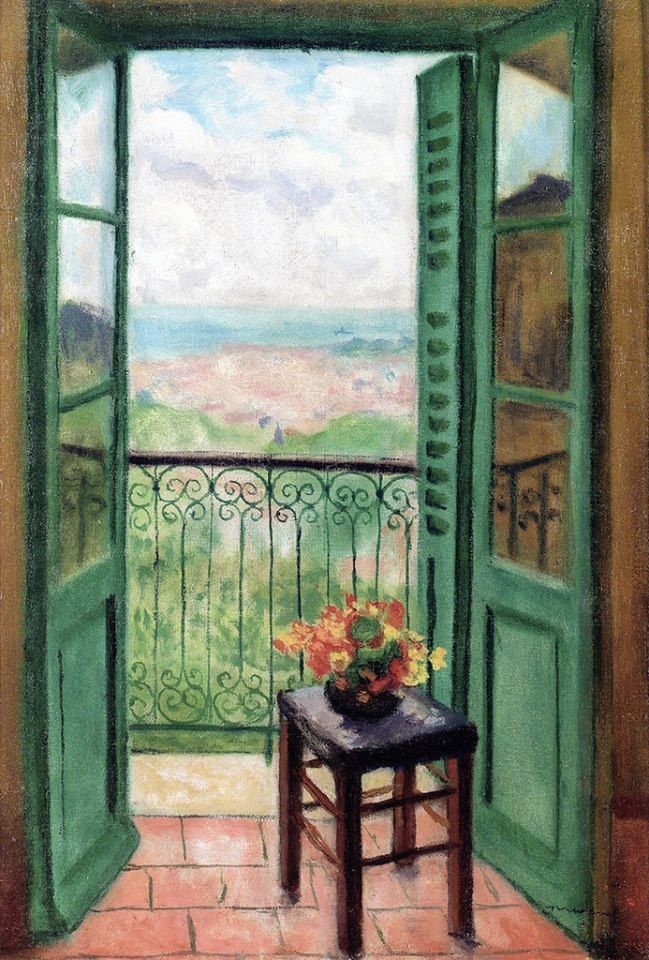
Art has played an influential role in making sense of the loss felt after the August 4 explosion. Tom Young’s “Strong Angels” and other paintings show a human dimension of the tragedy and its civilian heroes, who “join forces to lift the city’s grief,” writes Darine Houmani of Diffah Three (The New Arab). “Despite all its devastation, the August 4 explosion brought greater impetus to preserve our heritage and brought about a database of our historical buildings that hadn’t been done before,” states Mona Hallak, an architect, heritage activist, and director of the American University of Beirut’s Neighborhood Initiative, as cited in The New Arab. Several weighed in on the rebuilding efforts, including Lebanese architect Jad Tabet, who proposed “rehabilitation” rather than “reconstruction,” focusing on preserving the city’s existing social fabric and inhabitants alongside the architecture (for further reading on Jad Tabet and architectural heritage, see Al Jadid, Vol. 4, No, 25, Fall 1998; Vol. 5, No. 26, Winter 1999; and Vol. 24, No. 79, 2020). As art historian and gallery owner Andrée Sfeir-Semler says, “You need to nourish people with art and culture because that is what feeds their souls.”
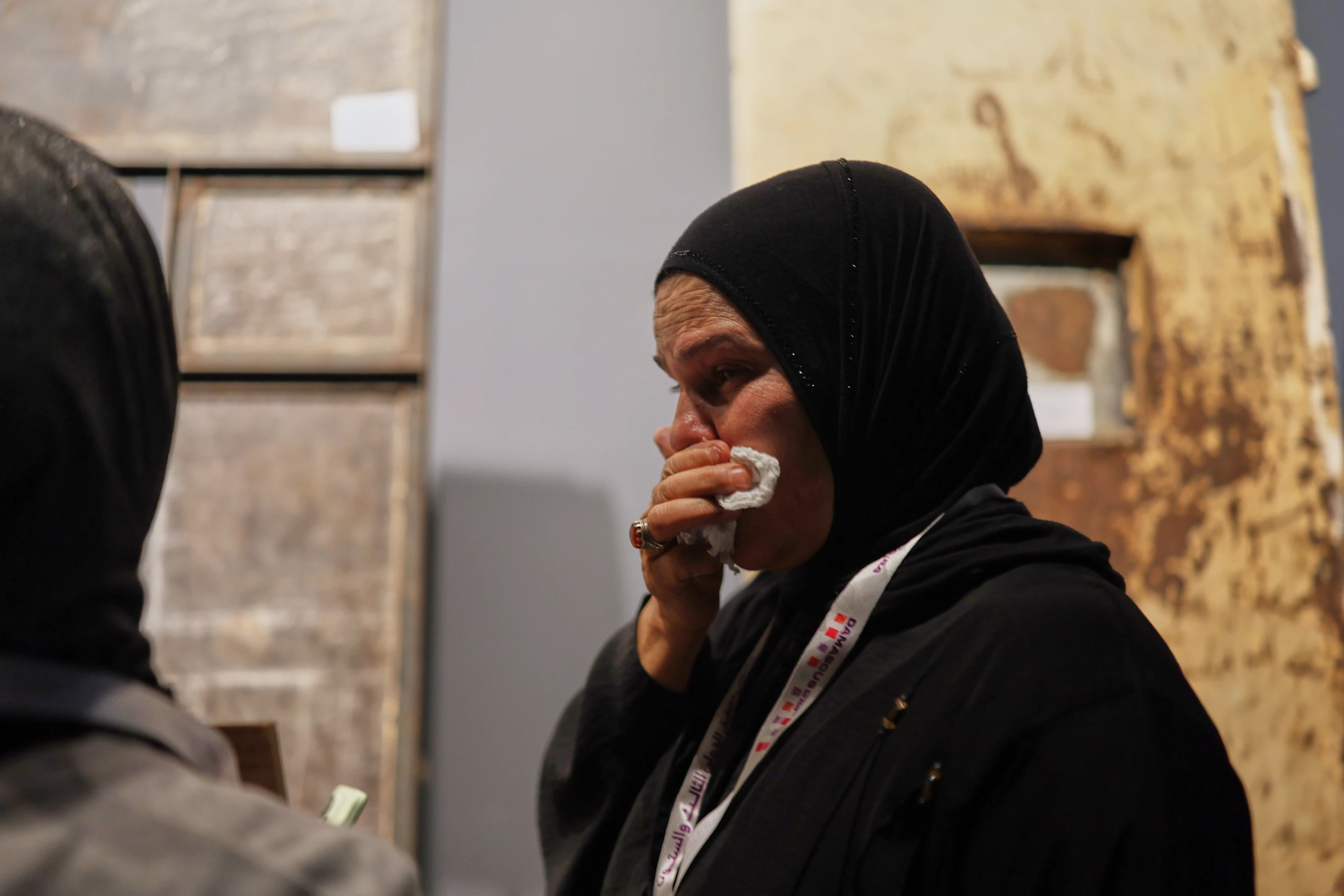
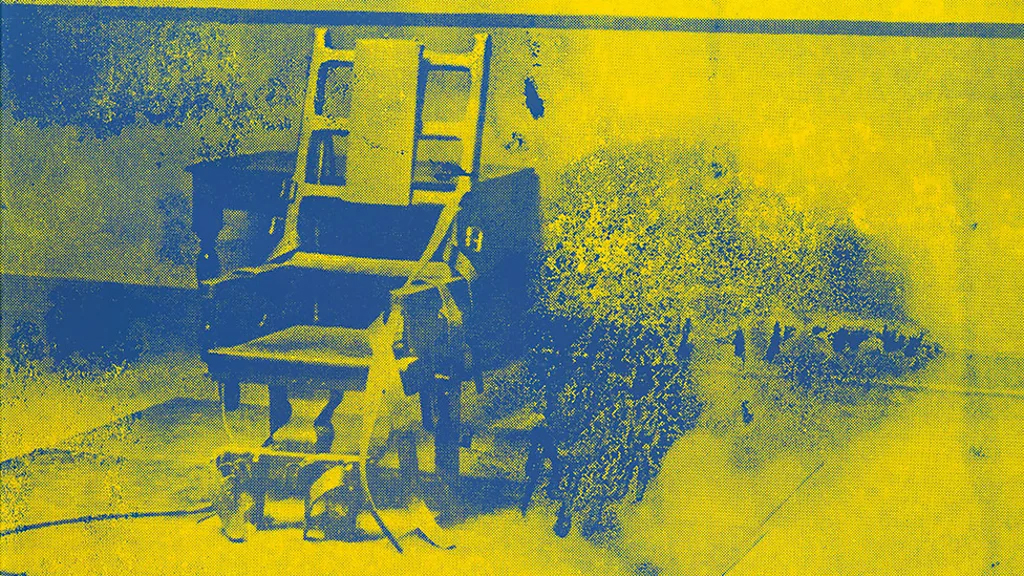
“Everything became visible. The prisons were opened. People entered them. Cells were photographed. Papers, clothes, remnants of beds, doors, and instruments of torture were collected. What had once been hidden was now placed before everyone’s eyes,” writes Sally Ali in her essay, “Should We ‘Eat Each Other’s Worries’?”, published in Al Modon.* Yet visibility does not necessarily constitute remembrance, nor does displaying the material remains of suffering mean that those who suffered have been cared for in the aftermath. The 63rd Damascus International Fair held in late August brought the horrors of Assad’s prisons out under open air for all to see. The exhibition “When the Walls Speak” was presented in the Interior Ministry’s pavilion. The exhibit included a reconstruction of a cell using real cell doors, detainees’ clothing, handcuffs and other restraints, and a chair used for torture — all items collected from the various prisons and security branches, including Military Security Branch 248, which operated under the Assad regime.
A healthy literature cannot be entirely free of crime fiction, or, more broadly, of literature that confronts crime, violence, and human conflict. No society is free of conflicts, whether visible or hidden. A brief look at Algeria’s history before and after independence reveals a long record of political upheaval, repression, and violence. The question, then, is not whether such realities exist, but whether literature is willing to confront them.
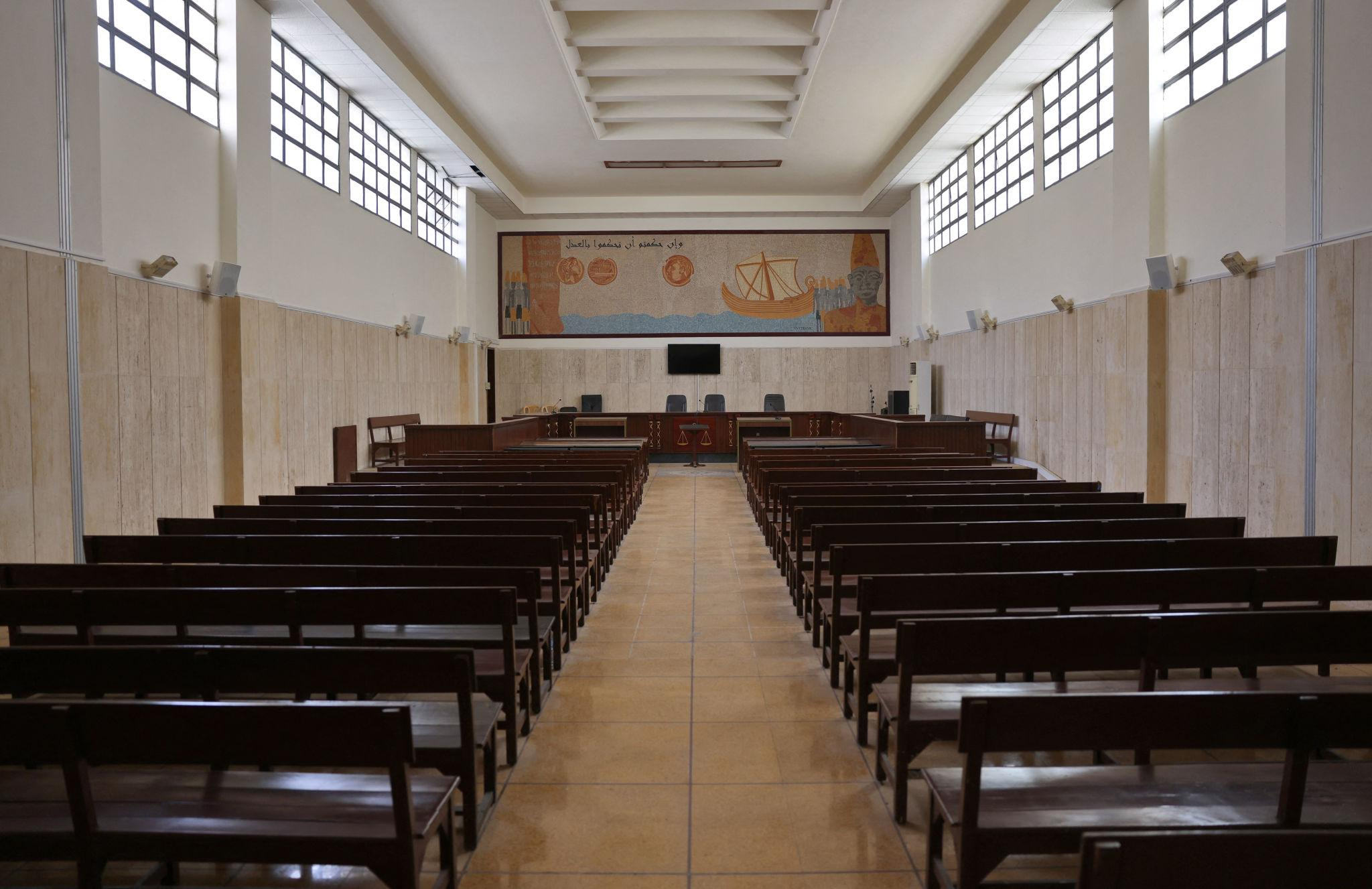
“A state is not tested when it tries someone who is widely loved. It is tested when it tries someone whom most of the country despises,” writes Sally Ali in her essay, “On One Day, Beirut Abolishes and Damascus Executes.” This observation is particularly relevant to the recent death penalty decisions in Syria and Lebanon, where the question of punishment has become inseparable from the question of state governance. On August 11, the Damascus Criminal Court sentenced former Syrian president Bashar al-Assad, his brother Maher al-Assad, cousin Atef Najib, former Defense Minister Fahd Jassem al-Freij, and five other former regime officials to death, a ruling that raises broader questions about what kind of government Syria will establish in the aftermath of the Assad regime. On the same day, Lebanon’s parliament approved the abolition of the death penalty, a decision that Marwan Harb argues may carry little meaning for Lebanese citizens unless the state can also address its political and social failures. Together, the contrasting decisions in Syria and Lebanon demonstrate how the death penalty can serve not merely as a form of punishment, but as a measure of a state’s commitment to justice, accountability, and legitimate governance.
August 4 and the Collapse of Lebanon's Last Illusion
By Elie Chalala
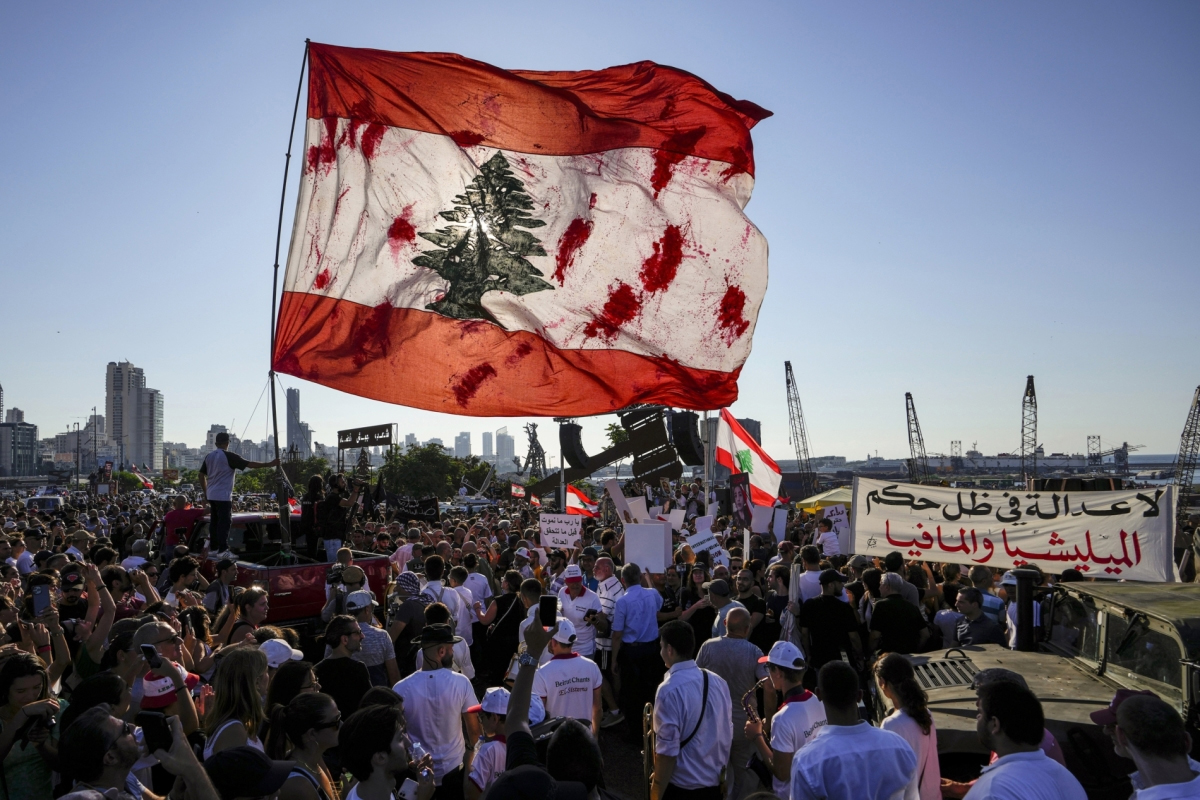
The Beirut Port explosion was not simply a tragic accident, but a catastrophe enabled by years of political negligence and institutional complacency. On August 4, 2020, 2,750 tonnes of ammonium nitrate stored in Hangar 12 alongside fireworks exploded, killing at least 218 people, injuring roughly 7,000, and displacing approximately 300,000 more. Yet in the six years since the blast, efforts to hold those responsible accountable have been repeatedly obstructed, leaving justice suspended and the victims without closure. Rather than focusing solely on the explosion itself, Sally Ali in her essay, “August 4 and the Insolence of Crime,” examines the political structure that allowed such dangerous conditions to persist and, more importantly, the system that has survived largely unchanged in its aftermath. The question is not simply whether justice has yet to arrive, but whether the greater danger lies in the state’s ability to endure six entire years after a crime that should have fundamentally transformed it.
French, Historical Memory, and Algeria's Linguistic Future
By Naomi Pham
In Algeria, the debate over whether French should be replaced by English has become increasingly entangled with broader geopolitical and ideological tensions, often overshadowing the country’s actual linguistic and educational needs. In his discussion of Algeria’s “language question,” Algerian novelist and author Waciny Laredj rejects both the demonization of French and the uncritical glorification of English, arguing instead for a pragmatic, historically informed, and educationally sound approach to multilingualism.* French remains deeply embedded in Algerian society, from everyday communication to education and professional life, making its complete removal an enormous and potentially disruptive undertaking. At the same time, Laredj challenges narratives that portray French solely as a colonial legacy, pointing to moments in which the language played an important role in intellectual, political, and liberation movements. The question facing Algeria is not simply whether French should be replaced by English, but whether such a transition is practical, historically conscious, and genuinely beneficial to the country and future generations.
Coming of Age Story Witnesses Tribulations of Growing up Arab American in Brooklyn
By
D.W. Aossey
Coming of age stories can be tricky. In no other genre do authors willingly stick out their necks, relying on a single, flawed adolescent to heroically carry the day. No clever plot twist can save our young protagonists if they’re not up to the task; no quirky sidekicks or kinky lovers can plaster over the holes. The vulnerability of a Holden Caulfield, the dimwitted charm of a Forrest Gump, or even the precocious morality of a Kevin Arnold was always destined to shine. And then we have Michael Haddad, the teenager at the center of “Arab Boy Delivered” by author Michael Aziz Zarou.
It’s the early 1960s. A Palestinian family takes over a neighborhood grocery store in an Italian part of Brooklyn, where working-class residents pop in and out for bread, milk, beer, and cigarettes. They’re mild to outright discriminatory against Arabs. “Camel jockey assholes, go back to the desert!” comes up more than once; vandalism and other mischief loom. The police have little help. Michael, the young son of old country proprietors Aziz and Jamila Haddad, searches his parent’s worried expressions and philosophizes. He listens to 60s music and goes through his coming-of-age routine, seeming more grown-up than he should be. He looks at himself in the mirror and thinks.
Ensconced in her garden of stone and statues, Jordanian poet, artist, and sculptor Mona al-Saudi has always been connected to the earth around her. She spent her earliest years playing amidst the ruins of the Roman Nymphaeum near her home in Amman, enamored with the geometric forms. Staring at the towering structures, her mind wandered to the more existential questions of life from a young age. “I would leave my little friends to play with the statues, converse with them, contemplate their folds, and I felt that they were silent creatures full of life… These legendary archaeological sites gave me the feeling of man’s ability to create great works that remain for eternity. And that is how my dreams began,” she said, as cited by Ghazi Anayem in Thaqafat. This love of heritage and history followed her wherever she went, inspiring all her creations for years to come. She told Gulf News, “Our house was only three meters away, and when I opened the door of my house, I could step into the Nymphaeum, with its Roman baths, columns, and scattered sculptures all over. These were literally historical stones. And I used to play in these ruins. That is why I belong to this kind of era, which I feel endures.”
Many definitions of Arab intellectuals are rooted in the idealistic tradition that glorifies them as guardians of values and ethics, as figures closer to “angels” and “faqihs,” who stand above politics and power struggles and enjoy a monopoly over the authority of knowledge. These notions reflect social illusions and popular perceptions of the time when intellectuals were considered part of a sacred class. A recurrent list of names often cited and idealized as intellectuals include Mahmoud Abbas al-Akkad, Taha Hussein, and Naguib Mahfouz. These perceptions clearly distinguish the intellectual from the politician.
Many definitions of Arab intellectuals are rooted in the idealistic tradition that glorifies them as guardians of values and ethics, as figures closer to “angels” and “faqihs,” who stand above politics and power struggles and enjoy a monopoly over the authority of knowledge. These notions reflect social illusions and popular perceptions of the time when intellectuals were considered part of a sacred class.
Stories My Father Told Me: Memories of a Childhood in Syria and Lebanon
By Elia Zughaib and Helen Zughaib
Cune Press, 2020
“Stories My Father Told Me: Memories of a Childhood in Syria and Lebanon” is a delightful collection of short one-page stories told to Elia Zughaib by his father, accompanied by paintings by his daughter, Helen Zughaib.
Book publishers, journalists, authors, and cultural activists received a large blow earlier this month. The anticipated return of the Beirut International and Arab Book Fair was met with disappointment and anger as violence broke out over Hezbollah’s presence through some publishing houses, which many argued overshadowed the spirit of the event. For over half a century, the book fair has held a celebrated place in Lebanon’s culture. Considered the oldest Arab fair, the tradition began in April 1956 at the American University of Beirut, becoming a prestigious event showcasing thousands of titles and visited by tens of thousands for decades since its launch. Not even ceasing during the Lebanese civil war, the only time the book fair was previously canceled was in December 2006 during the anti-government sit-ins in downtown Beirut. The outbreak of COVID-19 in March 2020, the explosion of Beirut’s port later that year, and the worsening economic crisis forced it to once again close its doors until the surprise announcement of its return, marking its 63rd session, running from March 3 to March 13.
Book publishers, journalists, authors, and cultural activists received a large blow earlier this month. The anticipated return of the Beirut International and Arab Book Fair was met with disappointment and anger as violence broke out over Hezbollah’s presence through some publishing houses, which many argued overshadowed the spirit of the event. For over half a century, the book fair has held a celebrated place in Lebanon’s culture.
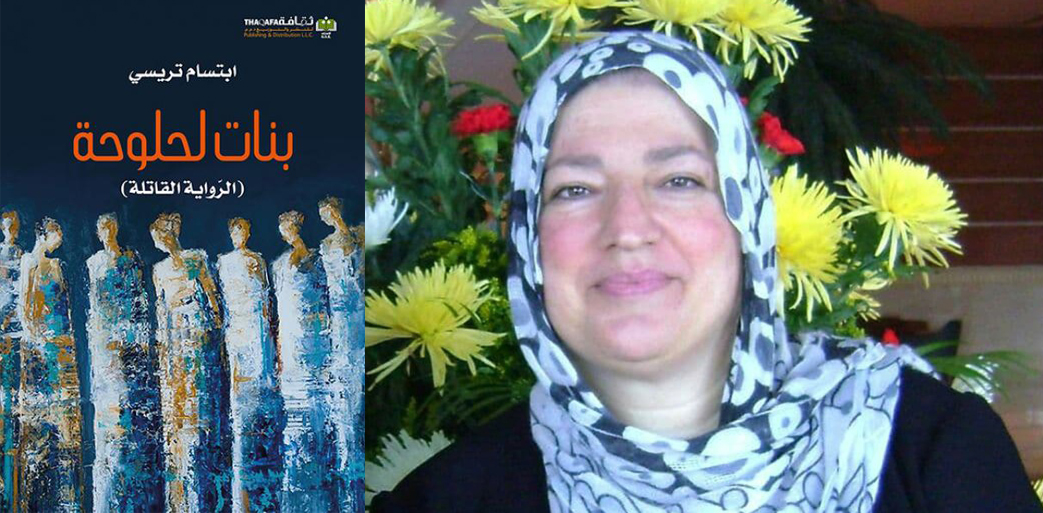
In a tale that spans generations, a recent novel shows the suffering of Syrian society through the abuse of sex workers and a struggle to make their smothered voices heard. Syrian novelist Ibtisam Ibrahim Tracy’s latest work, “Daughters of Lahlouha” (House of Culture for Publishing and Distribution, 2021), introduces readers to Syrian women suffering under both French mandate and Syrian regimes, social oppression, political tyranny, and the machinations of intelligence services over the past century. The novel was recently reviewed by Salman Zainuddin in Independent Arabia.
The corpse of the novelist Farida al-Raydah greets readers in the opening pages of the novel, crumpled in a chair with torn remnants of paper in her hands. On her computer lies an open, blank document entitled “Novel.” When a deliveryman named Abdel al-Salam discovers her, he searches through her belongings and finds the ready-to-publish manuscript of her novel discarded in the neighborhood trash bin.
A beloved artist in and beyond the Arab world, Palestinian political cartoonist and caricaturist Naji al-Ali's influence continues after 30 years after his death by assassination. Boualem Ramadani in the New Arab Diffah Supplement recently discovered a French book dedicated to al-Ali’s work, the first of its kind in France. Though published only in French, the book — "Le Livre de Handala" by Sivan Halevy and Muhammad al-Asaad, published by Scribest — includes important input from Naji al-Ali's eldest son, Khaled. He endeavored to preserve his father's legacy through the project. The book was first published in 2011 and received a new edition in 2015 with an updated preface from French political cartoonist Siné.
A beloved artist in and beyond the Arab world, Palestinian political cartoonist and caricaturist Naji al-Ali's influence continues after 30 years after his death by assassination. Boualem Ramadani in the New Arab Diffah Supplement recently discovered a French book dedicated to al-Ali’s work, the first of its kind in France. Though published only in French, the book — "Le Livre de Handala" by Sivan Halevy and Muhammad al-Asaad, published by Scribest — includes important input from Naji al-Ali's eldest son, Khaled.