
Fairouz, Motherhood, and Love Beyond Time
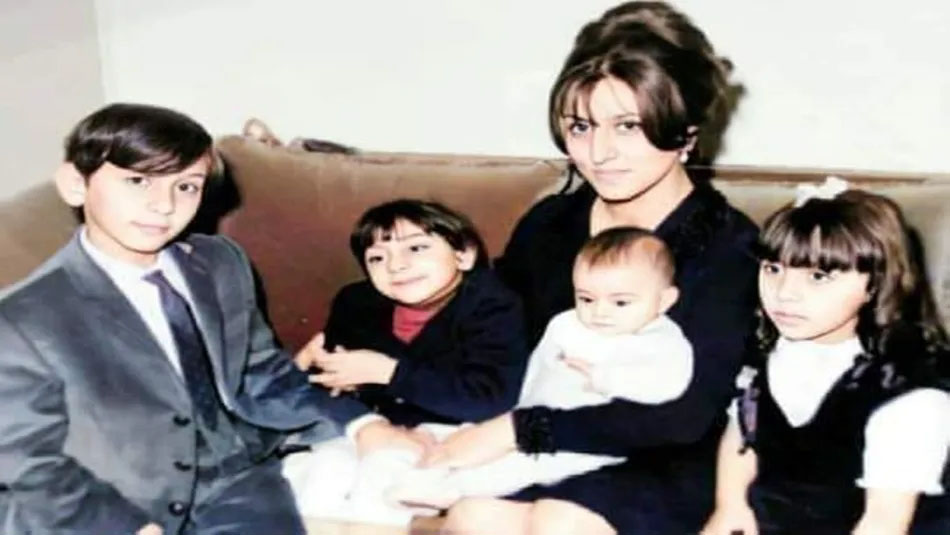
A web-based photograph of Fairouz and her children Ziad Rahbani, Rima Rahbani, Hali Rahbani, and Layal Rahbani.
Very little is known of Hali Rahbani, the youngest son of Lebanese singer and icon Fairouz and the late Lebanese composer and musician Assi Rahbani. Hali passed away at the age of 68 on January 8, 2026, months after the death of his elder brother, the composer Ziad Rahbani. Fans and admirers of the Rahbani family mourn alongside Fairouz, 91, who has lost her husband and three of her four children in her lifetime.
The fame of the legendary Fairouz and the Rahbani brothers reaches far beyond Lebanon's borders and touches the hearts of fans worldwide. Fairouz remains one of the most celebrated and influential Lebanese singers in the Arab world. Performing alongside the Rahbani brothers' compositions and eventually marrying Assi Rahbani, Fairouz and her family played monumental roles in Lebanon’s golden era of musical theater, which lasted from the late 1950s until the outbreak of the Lebanese Civil War in 1975. The family’s reputation continued with their son, the late Ziad Rahbani, whose musical style diverged from his parents’ to become uniquely his own.
With all that is known about this musically renowned family, the enigmatic existence of Hali Rahbani comes as a surprise to many longtime fans. Hali was born in 1958, four years into Assi and Fairouz’s marriage and two years after the birth of his older brother, Ziad. He contracted meningitis only 20 days after his birth, leaving him physically and developmentally disabled and wheelchair-bound. His existence was rarely discussed in public, and his first public appearance came in 2022, when his sister Rima Rahbani posted a photograph of him alongside his mother and brother. Hali was last seen in public at his brother’s funeral in Beirut.
Recollections from friends of the Rahbani family paint a brief yet vivid picture of Hali Rahbani, especially the special relationships he shared with his family, who treated him fondly. Journalist Doha Chams, a friend of Fairouz, described Ziad’s relationship with his younger brother: “Ziad, too, treated him like a small child. He himself would become a child again to play with him, as though Hali were his own young son rather than his brother. At some gatherings, he would tell us how much he enjoyed spending time with us. In an interview, he told Lorca Sbeity, one of our colleagues, that he could spend an entire day with his little brother and that his companionship was deeply enjoyable. His insistence on this point was a kind of defense of his brother’s dignity against pity, though one could sometimes detect a note of sadness in his voice.”*
Hali shared close bonds with his sisters. Rima, the youngest daughter, stayed home with him when their parents were away at concerts or other events. He would also spend time with his older sister Layal, who passed away prematurely in 1988, only 28 years old, due to a brain hemorrhage, like her late father.
Perhaps most tenderly recalled is Hali’s relationship with his mother. Fairouz kept all aspects of Hali’s life private, to the point that many forgot he existed or never knew he did. In the words of Fares Youssef in Al Araby, “She protected him from the negative aspects of the spotlight and refused to allow his private life to become a public matter.” When Hali received a poor prognosis from doctors as an infant, Fairouz personally saw to his caretaking and remained by his side for the remainder of his life. Though he was unable to speak, he could converse with his mother and sister Rima, who understood his vocal cues, writes Youssef. Fairouz spoke of Hali in a 1973 interview with Nazik Basila in the magazine The Arab Week (Al-Usbu’ al-Arabi), as cited by Mahmoud al-Zibawi in Al Modon: “The fear that I repeatedly said I did not know as a child was brought to me by my son Hali's illness, my mother's early death, and then the accident that Assi suffered. As for Hali, he was born normally in the summer of 1958. Beirut was then gloomy and frightening. I left the mountain at night and went to the hospital, where I spent the night alone. I returned home holding a healthy baby who was laughing and full of life. But only 20 days after his birth, he contracted what the doctors called Ethiopian jaundice. I locked myself and my son in the room and did not leave it for six months until my patience ran out from the anticipation, waiting, and searching for doctors. I have been carrying Hali's cross for 15 years, and I will continue to carry it until God wills."**
With Hali’s passing, grief once again descends upon the Rahbani household. In the past two decades, Fairouz withdrew from public life and chose to spend more time with her remaining children, having lost her ex-husband Assi in 1986 and her daughter Layal in 1988. Now, Rima is her only surviving child.
Some may believe Hali’s hidden existence was an act of shame. However, those who personally knew Fairouz and the family attest to the opposite — Hali Rahbani lived a life of dignity, surrounded by loved ones. Abdo Wazen describes in Independent Arabia, “While it has been said that the Rahbani family kept his existence a secret, making him a hidden or unknown son, this is utterly false and ignorant. Anyone who visited Fairouz, especially at her home in the Rabieh area (east of Beirut), would see him, seated in his chair, treated with respect, elegantly dressed, his black beard giving him an air of dignity, and always accompanied by a caregiver.”*** Doha Chams’ recollection of the family in her Al Araby article echoes the same observation: “She [Fairouz] treated him as a mother treats her healthy little child, not as a son who was ill or developmentally disabled, as was in fact the case. And every time I saw her with him, I caught a glimpse of Fairouz in her youth, when she became the mother of her four young children.”
In this time of mourning, Fairouz paints the portrait of a mother’s resilience, continuing to capture the hearts of her fans and supporters. Nazik Basila’s 1973 interview with Fairouz captures the tender relationship she shared with her son beautifully: “Suddenly, Hali pushes his chair towards where his mother is sitting, and she instantly banishes the worry from her eyes to smile at him and caress him. He senses the depth of her love and approaches, reassured and happy. She kisses him and takes both his hands, drawing him closer with gentleness, affection, and tenderness. Her kiss is her sweetest and most tender song. She carries the burden of her own child's worries while singing for the children of others."
*Doha Chams’ essay, ”Hali Assi Rahbani,” was published in Arabic in Al Araby.
**Mahmoud al-Zibawi’s essay, “The Passing of Hali Assi Rahbani: Fairouz's Beloved Cross,” was published in Arabic in Al Modon.
***Abdo Wazen’s essay, “Fairouz Drinks from the Cup of Loss of her Disabled Son and Silent Companion,” was published in Arabic in Independent Arabia.
This article appeared in Inside Al Jadid Reports, No. 152, 2026.
Copyright © 2026 AL JADID MAGAZINE